
Last updated October 16, 2026
 Wrought iron
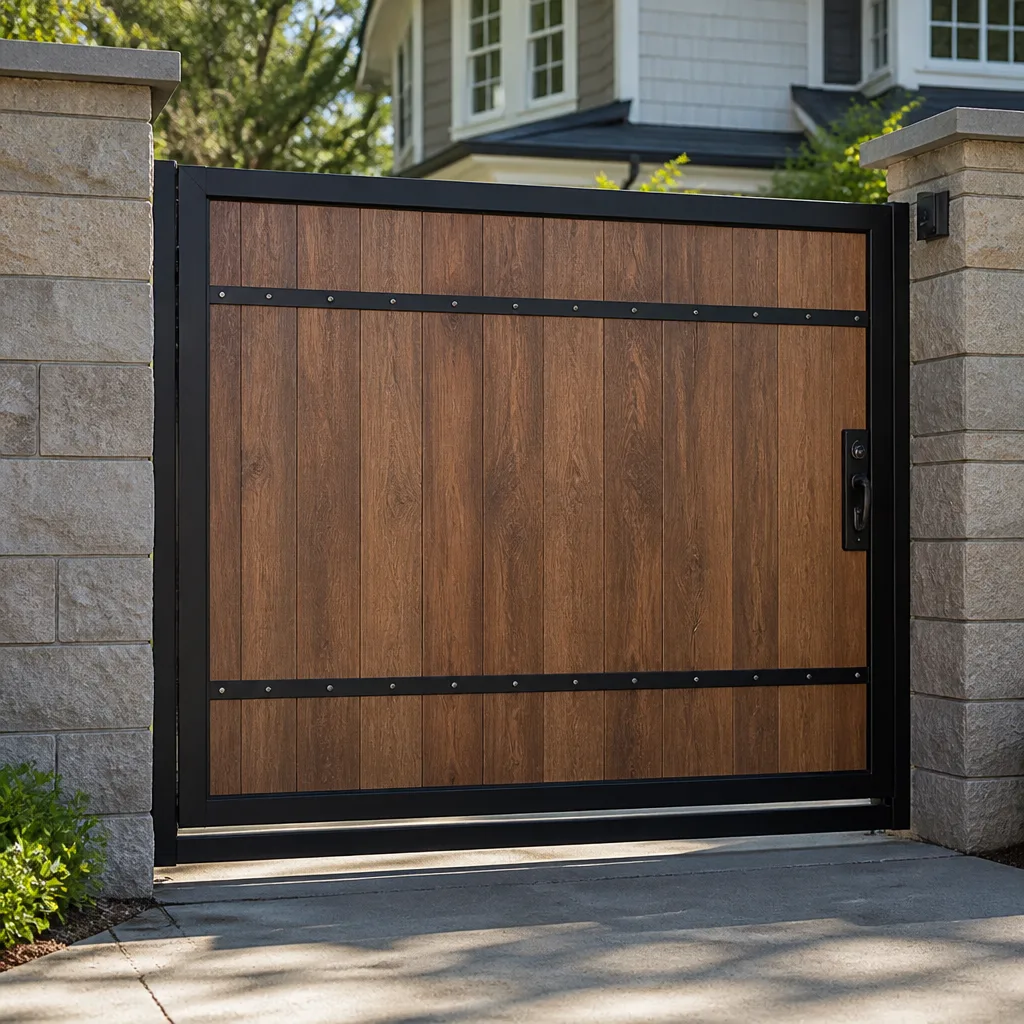 Wood & steel frame
 Farm & ranch
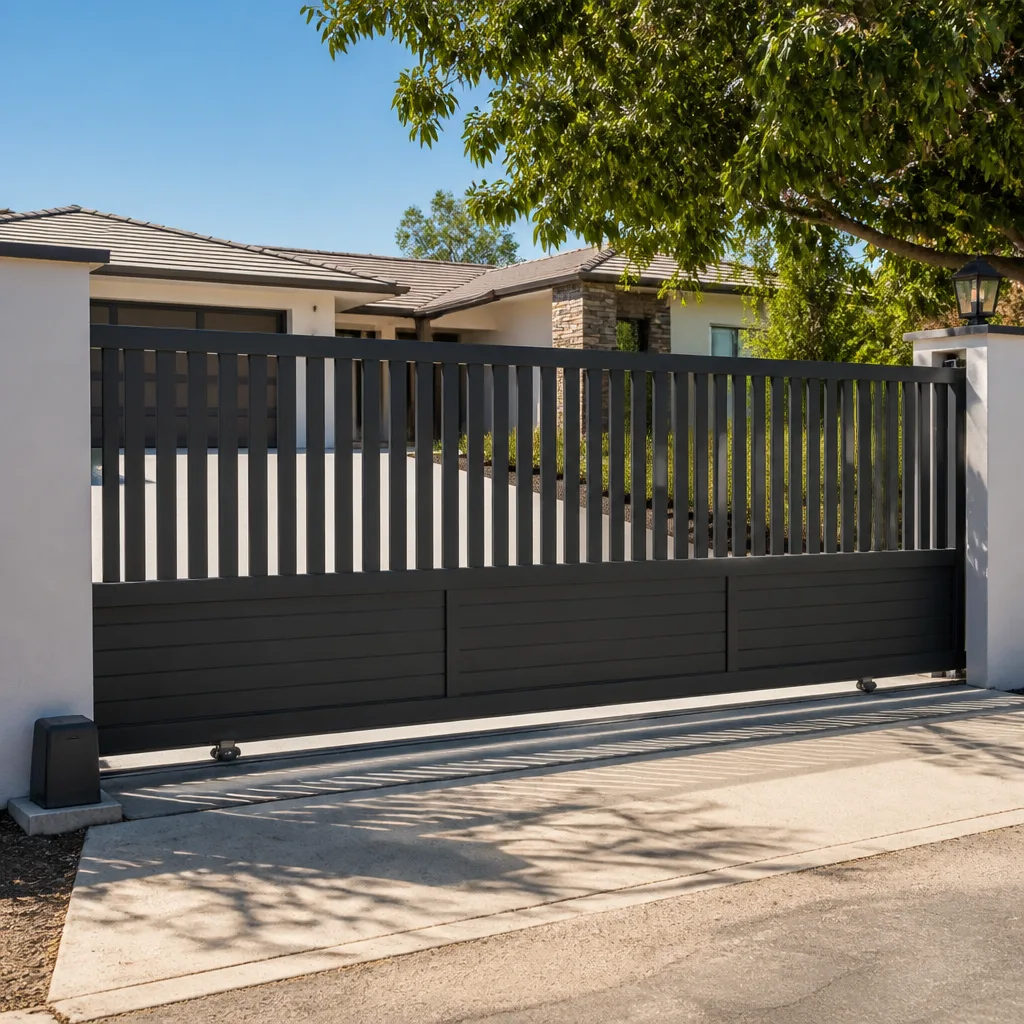 Sliding driveway gates
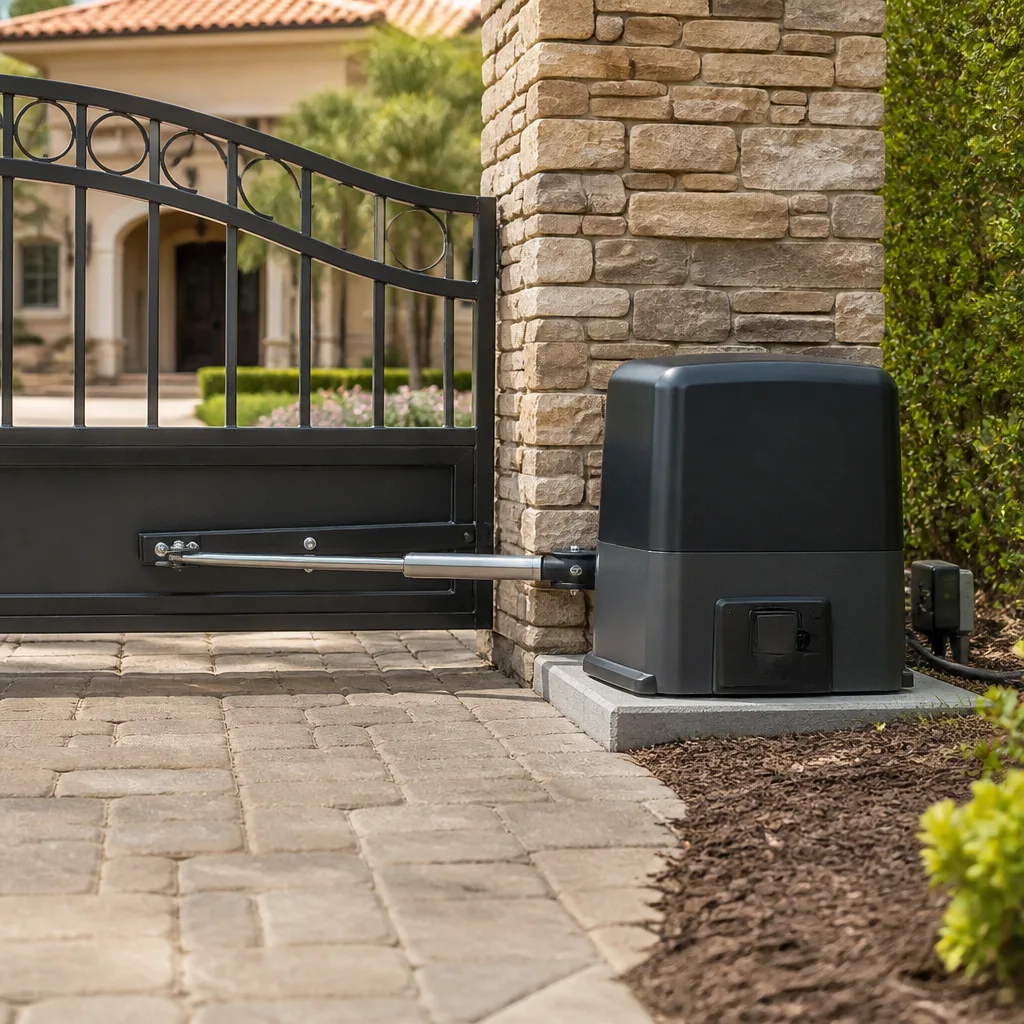 LiftMaster operators
Free on-site gate assessment - hinges, posts, and your LiftMaster or Nice gate operator checked before anything is quoted
The assessment is free and the quote is the invoice.
Get your free estimateSeasonal Gate Repair Care for Las Vegas: Year-Round Homeowner’s Guide
The costliest gate repairs in Las Vegas don’t spread evenly across the calendar. They cluster in two windows: late June, when the first 110°F days hit, and August, when monsoon moisture reaches sun-baked components that haven’t seen rain in months. If your gate maintenance plan follows a generic four-season model, you’re working against the desert instead of with it. This guide rebuilds your maintenance calendar around the two seasons that actually exist in Las Vegas: the brutal heat and the brief, violent monsoon. You’ll learn exactly what to check each month, what fails and why, and which tasks you can safely handle yourself versus which ones need a trained technician with the right diagnostic tools.
Quick Answer
Seasonal gate maintenance in Las Vegas should follow the desert’s actual stress calendar, not a traditional four-season model. The two critical windows are April through May (pre-summer heat prep: testing motor thermal cutoff, inspecting wiring insulation for UV cracking, and adjusting travel limits before metal expansion) and June through September (monsoon prep and recovery: clearing post-base drainage, applying dielectric grease to outdoor connections, and checking for caliche erosion after storms). A month-by-month checklist, plus two professional inspections per year, prevents most of the repairs we see during peak season. For a deeper dive into common failure modes, see The Complete Guide to Gate Repair in Las Vegas.
Styles & brands we work with
Table of Contents
- Why Las Vegas Gates Fail Differently Than Anywhere Else
- Pre-Summer Protocol: April Through May
- Monsoon Prep: June
- Post-Monsoon Recovery: July Through September
- The Winter Window: November Through February
- Month-by-Month Maintenance Calendar
- What You Can Do Yourself vs. When to Call Calder
- Common Mistakes to Avoid
Why Las Vegas Gates Fail Differently Than Anywhere Else
Most gate maintenance advice online was written for climates with four distinct seasons. It tells you to winterize in October and check for rust in spring. That model collapses in Las Vegas, where summer pavement temperatures regularly exceed 140°F and annual rainfall arrives in a handful of violent afternoon storms. Our technicians at Calder Gate Repair Las Vegas home see a consistent pattern: the same failures repeat every year at the same times, and nearly all of them trace back to two environmental factors no generic maintenance guide addresses.
The first is UV exposure. Las Vegas averages 294 sunny days per year, and the sun here isn’t gentle. It degrades wiring insulation, plastic housings, and rubber weatherstripping at a rate homeowners from other regions can’t imagine. The second is the humidity swing. For ten months of the year, Las Vegas air is bone dry. Then monsoon season arrives and outdoor electrical connections that have been fine for months suddenly fail because moisture found a way into a connector that dried out and cracked weeks earlier.
Understanding this pattern changes how you maintain a gate. The goal isn’t to follow a generic seasonal checklist. It’s to prepare for the two predictable stress events: the first extreme heat wave and the first monsoon storm. Any maintenance that happens outside those preparation windows is either too late or too early.
Pre-Summer Protocol: April Through May
April and May are the most important maintenance months in Las Vegas. The weather is still mild enough to work comfortably, but the first 100°F-plus days are weeks away. What you do now determines whether your gate survives July without a breakdown.
Heat does three specific things to gate systems. First, metal expands. A gate that swings freely at 75°F might bind at 110°F because the steel grew a quarter inch in length. Second, motor internals run hotter, which accelerates wear on capacitors and control boards. Third, wiring insulation that has been baking in the sun for years becomes brittle and cracks, exposing conductors to whatever moisture eventually arrives.
Here is the pre-summer protocol we recommend for every Las Vegas homeowner:
- Test the motor thermal cutoff. Run your gate through five full open-close cycles in a row on a warm afternoon. If the motor stops responding partway through, the thermal overload switch is tripping, which means the motor is working harder than it should. That is an early warning sign of a failing capacitor or a gate that is binding.
- Inspect all visible wiring insulation. Look at every wire you can see, especially where it enters the motor housing and where it runs along the gate frame. If the insulation looks chalky, faded, or has hairline cracks, have it evaluated. UV-degraded wiring is the single most common cause of intermittent gate failures in Las Vegas.
- Adjust travel limits now. The travel limit is the setting that tells the gate exactly where to stop when it opens and closes. If your gate slams against the stop or doesn’t quite reach it, the limit switch needs adjustment. Doing this before extreme heat prevents the metal expansion from turning a minor misalignment into a broken hinge or bent bracket.
- Lubricate hinges, rollers, and the chain or belt drive. Use a dry silicone or white lithium spray, not WD-40, which attracts dust and turns into a grinding paste within weeks. In Las Vegas, dust is not an occasional nuisance. It is a constant airborne abrasive.
- Check the gate’s physical alignment. Walk the gate through its full travel path and watch for binding, scraping, or a change in the sound. Any new sound is worth investigating. Gates should be quiet.
One thing we see every year in Las Vegas: homeowners skip this window because the gate “works fine right now.” That is exactly the point. The pre-summer protocol exists to catch problems before the heat turns them into failures. If you catch a binding hinge in April, it’s a $150 adjustment. If you catch it in July, it might be a broken weld and a bent gate frame. The math is not complicated. If any part of this protocol feels beyond your comfort level, call Gate Repair in Las Vegas for a pre-season inspection. Our technicians arrive with a written diagnostic checklist and walk you through findings before any work is quoted.
Monsoon Prep: June
June in Las Vegas is the calm before the storm, and I mean that literally. The North American Monsoon typically arrives between late June and mid-July, bringing the year’s first meaningful rainfall. But the damage does not happen on the rainy day. It happens weeks earlier, when untreated connections sit exposed to the first humid air of the season.
Here is what the monsoon actually does to a gate system:
- Water enters cracked wiring insulation and shorts connections that have been working for months.
- Wind pushes the gate against its travel limits, stressing hinges and welds that are already hot and expanded.
- Rain collects at the base of gate posts, softening the soil and revealing erosion that has been happening invisibly for years.
- Debris washed by runoff clogs the track on sliding gates, causing the motor to strain and trip its thermal cutoff.
June is your last reliable window to prepare. Here is the monsoon prep checklist:
- Clear post-base drainage. Walk around each gate post and remove any gravel, dirt, or debris that would hold water against the metal. Check that the base of each post is at or slightly above grade. If water pools at the post, it will find its way into anchor bolts and accelerate corrosion.
- Apply dielectric grease to outdoor electrical connections. This is a cheap, ten-minute task that prevents the most expensive monsoon-related repairs. Any wire connection exposed to the elements, including photocell wires and keypad wiring, benefits from a thin coating. The grease repels water while still conducting electricity.
- Test photocell alignment. The photocells are the small sensors near the bottom of the gate opening that detect obstructions. Hold a piece of cardboard in front of each sensor and verify the gate stops and reverses. If the sun is low on the horizon, you may need to shield the lenses with a small hood. Direct sunlight on a photocell is one of the most common false-trigger causes we see in Las Vegas.
- Check the gate’s weatherstripping and bottom rail. Wind-driven rain gets under the gate and into the motor enclosure. Any gaps in the bottom rail should be sealed with a compatible silicone sealant. If you have a swing gate with a low clearance, consider adding a deflector strip that channels water away from the hinge posts.
- Run a full cycle test with simulated obstruction. Place an object in the gate’s path and trigger the close function. The gate should stop and reverse before making contact. After six months of dust accumulation, obstruction sensors sometimes lose sensitivity. June is the right time to verify they still work.
- Inspect post footings for erosion. Walk around each gate post and look for gaps between the concrete footing and the surrounding soil. If you can see under the footing or if the gap is wider than a pencil, water is undermining the post. This needs to be addressed before the post shifts and the gate goes out of alignment.
- Check fasteners for corrosion. Monsoon moisture is the first water many outdoor fasteners have seen in months. Surface rust on bolts and screws is normal. Deep pitting or flaking is not. Pay special attention to any fastener that holds a hinge, a motor bracket, or the limit switch assembly.
- Reseal gaps in the bottom rail. If water pooled on your gate during the storm, it found every gap in the bottom rail. Reseal those gaps now, before the next storm arrives. Use a silicone-based sealant that remains flexible in extreme heat.
- Test the full system again. Run the gate through ten complete cycles and listen for changes. If the motor sounds strained or the gate hesitates in a new spot, something shifted during the storm. It is always cheaper to diagnose a shifting gate now than to replace a burned-out motor later.
- Dry and clean the control board enclosure. Open the motor or control board housing and look for signs of moisture. Condensation inside an enclosure can cause intermittent faults that are nearly impossible to diagnose after the fact. If you see water droplets or corrosion on the board, schedule a professional evaluation.
- Painting and powder coating touch-up. If your gate has scratches, chips, or spots of surface rust, this is the time to address them. A properly prepped and painted repair needs 24 to 48 hours of moderate temperatures to cure. November through February is the only stretch in Las Vegas with those conditions reliably.
- Weatherstripping replacement. The rubber and vinyl strips along the bottom and sides of the gate degrade faster in Las Vegas than almost anywhere else. The UV exposure breaks down the material’s flexibility until it cracks and falls away. Winter is the right time to replace it, because adhesive-backed weatherstripping needs time to bond at moderate temperatures.
- Grease and lubrication cycles. While lubrication should happen throughout the year, winter is a good time for a deep clean and regrease of the chain or belt drive, the hinge pins, and the roller tracks. This is maintenance, not repair, and it keeps the system running smoothly into the spring.
- Full system evaluation. After a full summer and monsoon season, the winter window is the right time to step back and assess the overall health of the system. If anything was deferred during the summer, this is the season to handle it.
- January: Inspect weatherstripping for cracks. Run gate through full travel and listen for new sounds. Schedule any deferred cosmetic work now while temperatures are ideal for curing.
- February: Touch up paint and powder coating on warm days. Check hinges and brackets for surface rust. Verify photocell alignment after any winter storms.
- March: Begin pre-summer checklist. Inspect wiring insulation for UV damage. Apply dielectric grease to connections. Test motor thermal cutoff.
- April: Adjust travel limits. Deep-clean and regrease chain or belt drive. Check gate alignment and look for binding. Schedule a professional pre-summer inspection if you want a second set of eyes.
- May: Complete any remaining pre-summer tasks before temperatures reach triple digits. Test the gate on the first 100°F day to verify it does not bind when metal expands.
- June: Run the monsoon prep checklist: clear post drainage, apply dielectric grease, test photocells, seal bottom rail gaps, and run an obstruction test.
- July: After each storm, check post footings for erosion and look for new corrosion. Run the gate through ten cycles after the first significant rain.
- August: This is the peak failure month. Watch for intermittent operation, a motor that stops mid-cycle, or a gate that reverses on its own. Call for repair at the first sign of trouble rather than waiting.
- September: Full post-monsoon inspection. Check all fasteners, reseal any gaps, inspect the control board for moisture, and address any erosion before it widens.
- October: Transition month. Run a full system evaluation. Note anything that needs addressing during the winter window and schedule it now.
- November: Begin winter window work: painting, powder coating touch-up, weatherstripping replacement. These tasks only cure correctly in these temperatures.
- December: Check for freeze-related binding. Clean roller tracks and hinges. Review the year’s maintenance log and note any recurring issues to discuss with a technician.
- Visual inspections of wiring, fasteners, and post footings
- Clearing debris from tracks and post bases
- Applying dielectric grease to accessible connections
- Testing photocells and obstruction sensors using a cardboard test
- Lubricating hinges and rollers with the correct product
- Resealing small gaps in the bottom rail with silicone sealant
- Any repair involving the motor, capacitor, or control board. These components carry high voltage and discharge stored energy even when disconnected. A capacitor can hold a charge strong enough to cause serious injury.
- Travel limit adjustments on a gate that is binding. The limit switch is a precise setting. Getting it wrong means the gate either fails to close fully or strains against the stop, both of which cause cascading damage.
- Post footing repair or replacement. A gate post under tension is dangerous to move. If the post is shifting, the gate’s weight is working against you while you work on it.
- Any repair involving the high-tension springs on a sliding or cantilever gate. These springs store enormous energy. If they release unexpectedly, the result is not a bruised hand. It’s a broken bone or worse. Do not attempt this without the proper tools and training.
- Following a four-season maintenance calendar. Las Vegas doesn’t have four seasons. It has two stress events and two transition windows. A maintenance plan built around spring and fall leaves you unprepared for the actual failure points: extreme heat and monsoon moisture.
- Using the wrong lubricant. We see this almost weekly. WD-40 is a solvent, not a lubricant, and in Las Vegas dust it turns into a grinding paste that accelerates wear. Use a dry silicone or white lithium grease on hinges and rollers.
- Ignoring a slight binding in March because the gate still works. A gate that binds slightly at 75°F will bind significantly at 110°F. If you feel resistance now, address it now. The heat will not fix it, and the repair bill will be higher in July.
- Skipping the dielectric grease because you live in a desert. The first monsoon storm will find every dry, cracked connection on your gate. Dielectric grease is a ten-minute application that prevents repairs costing hundreds.
- Adjusting the travel limit without understanding the full picture. The travel limit is not just a convenience setting. If it’s off, the gate either doesn’t close fully, creating a security gap, or slams against the stop, damaging hinges and the motor. This is a precision adjustment, not a guess.
- Waiting until August to think about monsoon prep. By August, the first storms have already arrived. The prep window closes in June. After that, you’re in repair mode, not prevention mode.
- Painting a gate in July because you have time off. Paint and powder coating need moderate temperatures to cure. What you apply in July will look bad in six months and fail in two years. Wait for the winter window.
If June passes and your gate has not been inspected, don’t wait for the first storm to test it. Monsoon storms in Las Vegas are unpredictable, and the first storm of the season is often the most destructive because it hits a city full of components that have been dry for ten months. If you see any corrosion on electrical connections or hear a new sound from the motor, call Electric Gate Repair in Las Vegas before the storm does the damage for you.
Post-Monsoon Recovery: July Through September
After the first major monsoon storm passes through Las Vegas, the real work begins. The storm exposed every weakness your gate system had, and the period immediately after is when those weaknesses turn into chronic problems.
The most overlooked post-monsoon issue is caliche erosion. Caliche is the hard, cement-like layer of calcium carbonate that sits beneath much of Las Vegas’ topsoil. When monsoon rain hits caliche, the water doesn’t absorb. It runs off. That runoff follows the path of least resistance, which is often around the base of a gate post. What starts as a small channel becomes a gap, and the gap becomes a loose post that shifts every time the gate cycles.
Here is the post-monsoon checklist, to be run after each significant storm and as a full inspection once the monsoon season winds down in September:
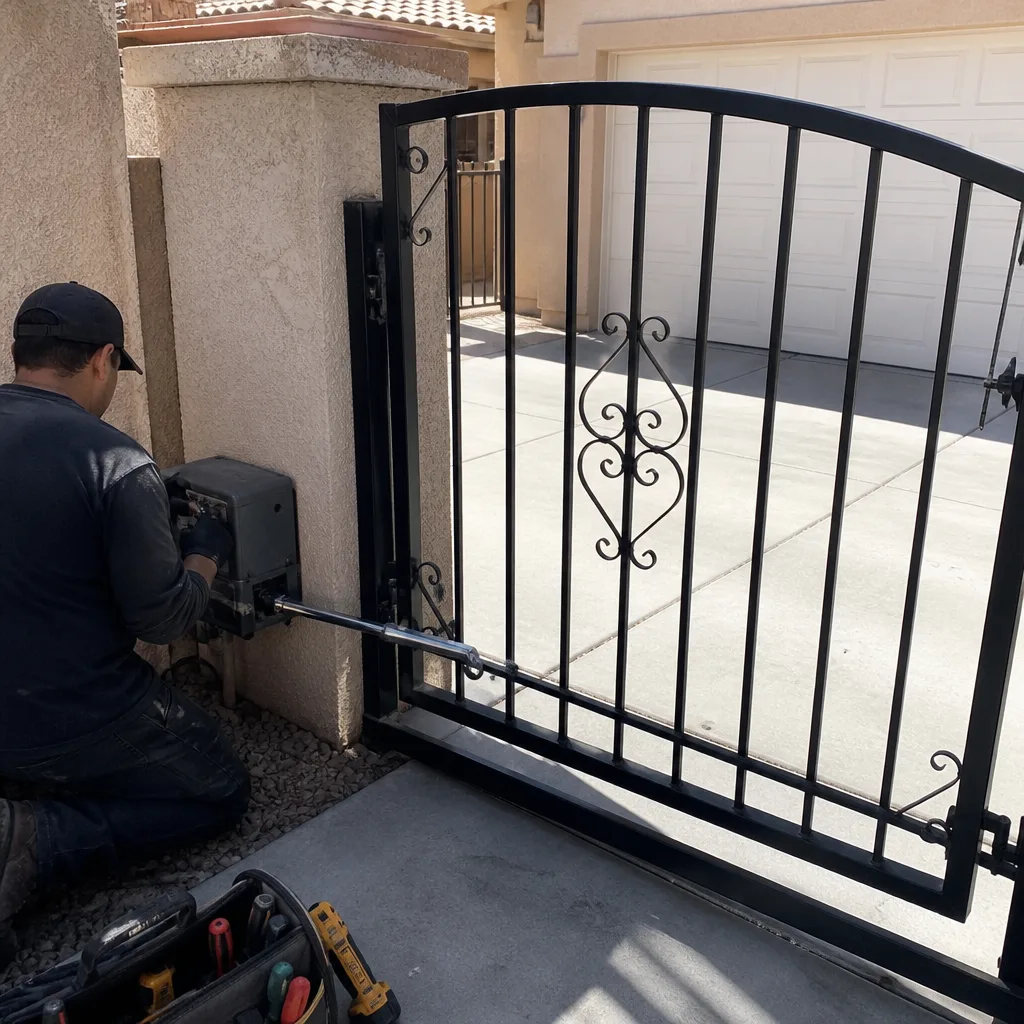
We see more gate opener failures in August than any other month of the year. The reason is rarely the rain itself. It’s the ten months of UV damage and dust accumulation that prepared the system to fail, and the rain simply closed the circuit. If your gate acts up after a monsoon storm, Gate Opener Repair in Las Vegas is what we handle most during this window. Our technicians are factory-familiar with LiftMaster, FAAC, BFT, Linear, Viking, Ghost Controls, DoorKing, Elite, and Mighty Mule, so we can diagnose the issue in one visit rather than ordering parts and coming back.
The Winter Window: November Through February
Winter in Las Vegas is the only time of year when outdoor work is genuinely pleasant, and it is the only window for cosmetic and material work that requires specific temperature ranges to cure correctly. Paint, powder coating touch-up, and weatherstripping adhesives all have minimum application temperatures, usually around 50°F. In a Las Vegas summer, those temperatures never happen. In winter, they happen daily.
Here is what the winter window is actually for:
One note on winter maintenance: Las Vegas does get occasional freezing temperatures, typically in December and January. A gate that’s binding slightly during a cold snap might return to normal when temperatures rise. That does not mean the problem solved itself. It means the metal contracted enough to hide the problem. The underlying misalignment is still there, waiting for the first hot day to return.
Month-by-Month Maintenance Calendar
If you want a single reference to keep on your phone or print for the garage wall, here it is. Each month lists the specific tasks that matter in Las Vegas, not generic advice from a four-season climate:
What You Can Do Yourself vs. When to Call Calder
This guide assumes a homeowner who is reasonably handy, but there are clear lines between what you should attempt and what you should leave to a trained technician. In Las Vegas, the heat makes some tasks more dangerous than they appear, and the stakes for a gate failure are higher than most homeowners realize. Our DIY vs Professional Gate Repair: The Las Vegas Homeowner’s Decision Guide walks through exactly where to draw that line. A gate that won’t close is a security gap on your property.
Safe to handle yourself:
Leave to a professional:
When you do call a professional, you want someone who shows up with specific knowledge. We are factory-familiar with FAAC, BFT, Linear, and Viking operators, plus five other major brands, so we’re not figuring it out on your gate. We also put the price in writing before any work starts, as part of our standard quote process. That means you see the number, you agree to it, and that is the number on your invoice. No surprises.
Common Mistakes to Avoid
See the difference
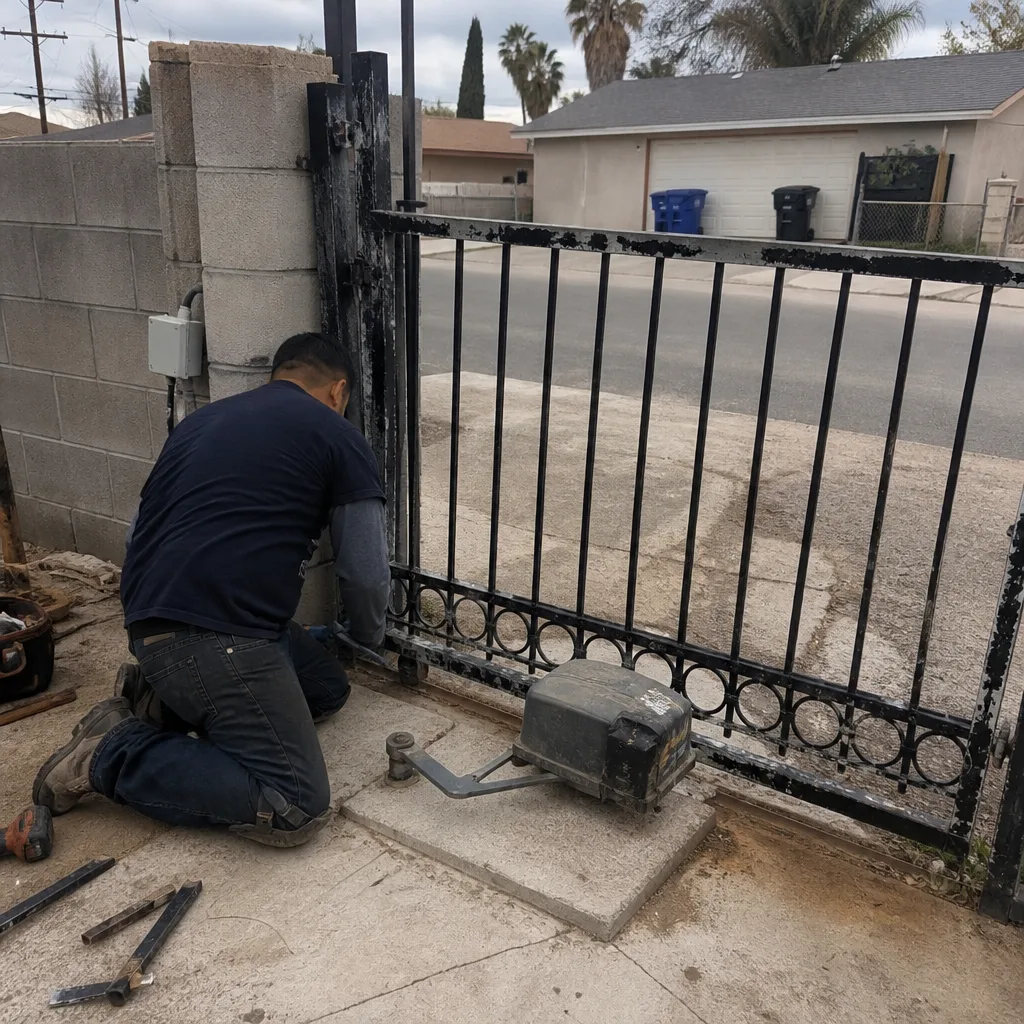 Before
 After
After Before
 After
After Before
 After
AfterWhen to Call a Professional
Some gate issues are unambiguous enough that waiting makes the problem worse. If your gate stops mid-cycle and restarts only after a cooldown, the motor’s thermal protection is tripping for a reason. If the gate reverses on its own when no obstruction is present, the photocells or the sensitivity setting are at fault and the issue will not fix itself. If you hear grinding, popping, or a sound that was never there before, something is failing mechanically. If the gate post is visibly moving, stop using the gate immediately and get it evaluated. A shifting post under tension can fail suddenly. Calder Gate Repair Las Vegas offers free estimates in Las Vegas and covers every job with our 365-Day Done Right Promise: a written guarantee on every repair, and a free second visit if anything we fix fails within a year. Call (725) 220-0280 and a live person will answer, day or night.
Frequently Asked Questions
Twice per year: once in April or May before the extreme heat arrives, and once in September after the monsoon season winds down. The pre-summer visit catches problems before heat and metal expansion turn them into failures. The post-monsoon visit addresses any erosion, corrosion, or moisture issues the storms exposed. Between those visits, the monthly checklist in this guide covers the basics. If you want a professional evaluation but aren’t sure whether you need it, call (725) 220-0280 for guidance. Estimates are free.
Most preventive maintenance visits in Las Vegas run between $125 and $250, depending on the gate type and the number of components checked. A routine inspection, lubrication, and minor adjustment typically lands at the lower end. If the visit uncovers a failing part, like a capacitor or a limit switch, the repair cost is separate and quoted in writing before any work begins. Many of our customers schedule one annual pre-summer visit and handle the rest themselves. For an exact quote on your specific gate, call (725) 220-0280 for a free estimate.
Motor failures caused by thermal overload are the most common preventable repair. The motor doesn’t fail on the first hot day. It fails after months of running hotter than it should because the gate binds slightly, the limit switch is off, or the drive chain is over-tightened. The pre-summer protocol in this guide, particularly the thermal cutoff test and travel limit adjustment, catches those issues before the motor burns out. A new motor runs $800 to $1,800 installed, while the maintenance check that would have caught the problem typically costs under $250.
You can absolutely handle the inspection, lubrication, cleaning, and testing tasks described in this guide. The line is drawn at anything involving the motor, capacitor, control board, high-tension springs, or a shifting post. Those components involve high voltage or stored mechanical energy, and the cost of a mistake is serious. If you’re comfortable with the monthly checklist and your gate is functioning normally, you may only need a professional visit once or twice a year. If anything on the checklist reveals an issue, schedule a professional evaluation rather than attempting the repair. Call (725) 220-0280 and we’ll walk through what you’re seeing.
That is thermal expansion. The metal in your gate and track grows when the afternoon sun hits it, and the gate that cleared its stops at 75°F no longer does at 110°F. The fix is a travel limit adjustment, sometimes combined with a physical alignment check. This is exactly the kind of issue our pre-summer protocol is designed to catch before the heat arrives. If you’re already experiencing it, call (725) 220-0280 and we’ll send a technician with a trackable arrival time and a written price.
A dry silicone spray or white lithium grease. Avoid WD-40 and other penetrating oils as primary lubricants. They’re fine for freeing a stuck part, but they leave behind a thin film that attracts dust, and Las Vegas has an endless supply of dust. Within weeks, that film becomes an abrasive paste that accelerates hinge and roller wear. Apply dry lubricant to hinges, rollers, and the drive chain or belt two to three times per year, or more often if the gate sees heavy daily use.
The Bottom Line
Las Vegas gate care is a different discipline from gate care anywhere else. The desert doesn’t care about your calendar. It cares about heat and sudden moisture, and it punishes gates that aren’t prepared for both. The pre-summer and pre-monsoon preparation windows in this guide are the highest-leverage maintenance periods of the year. Fifteen minutes of work in April and June prevents most of the repairs our technicians handle in July and August. If you take one thing from this guide, make it this: run the pre-summer checklist before the first 100°F day and the monsoon checklist before the first storm. Your gate will reward you with years of quiet, reliable operation. For more guides & resources on desert gate care, visit our blog.
Written by Nico Alvarez, Owner at Calder Gate Repair Las Vegas, serving Las Vegas since 2009.