
Last updated October 16, 2026
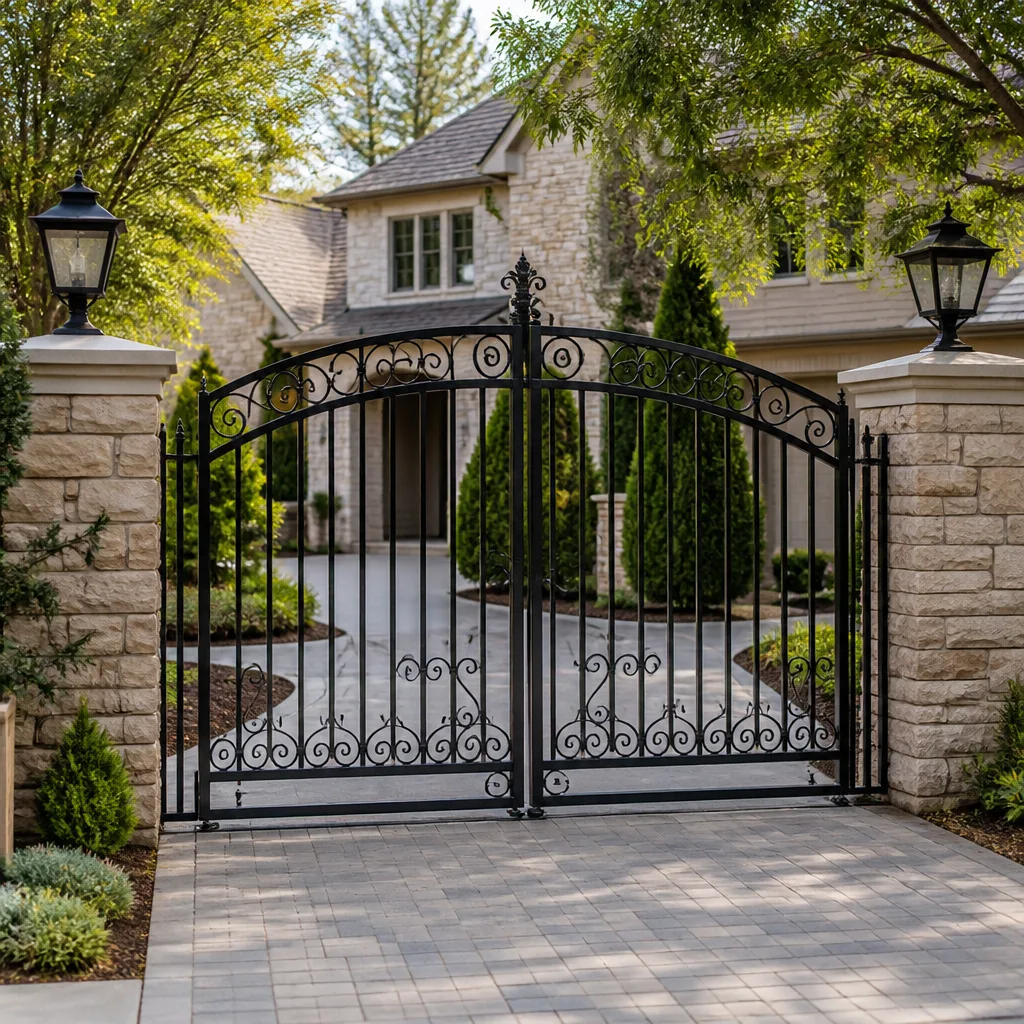 Wrought iron
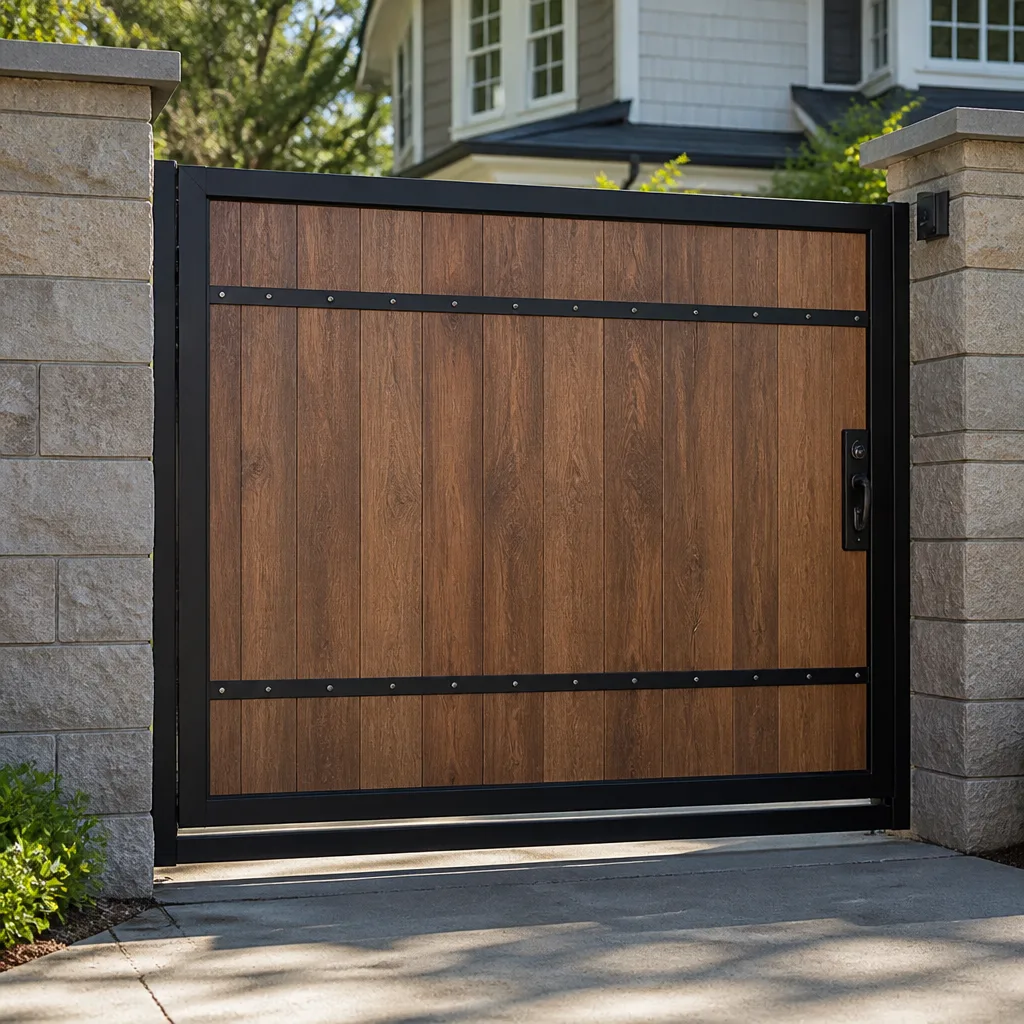 Wood & steel frame
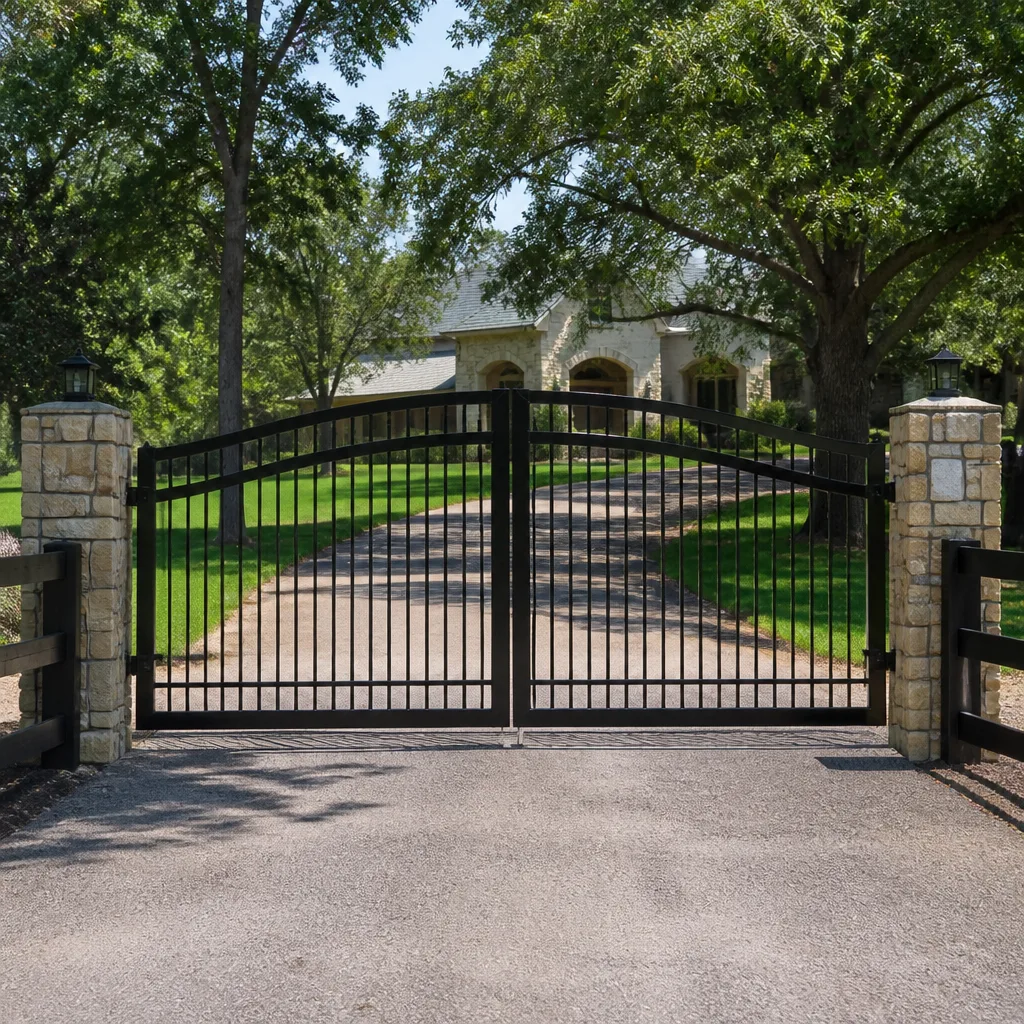 Farm & ranch
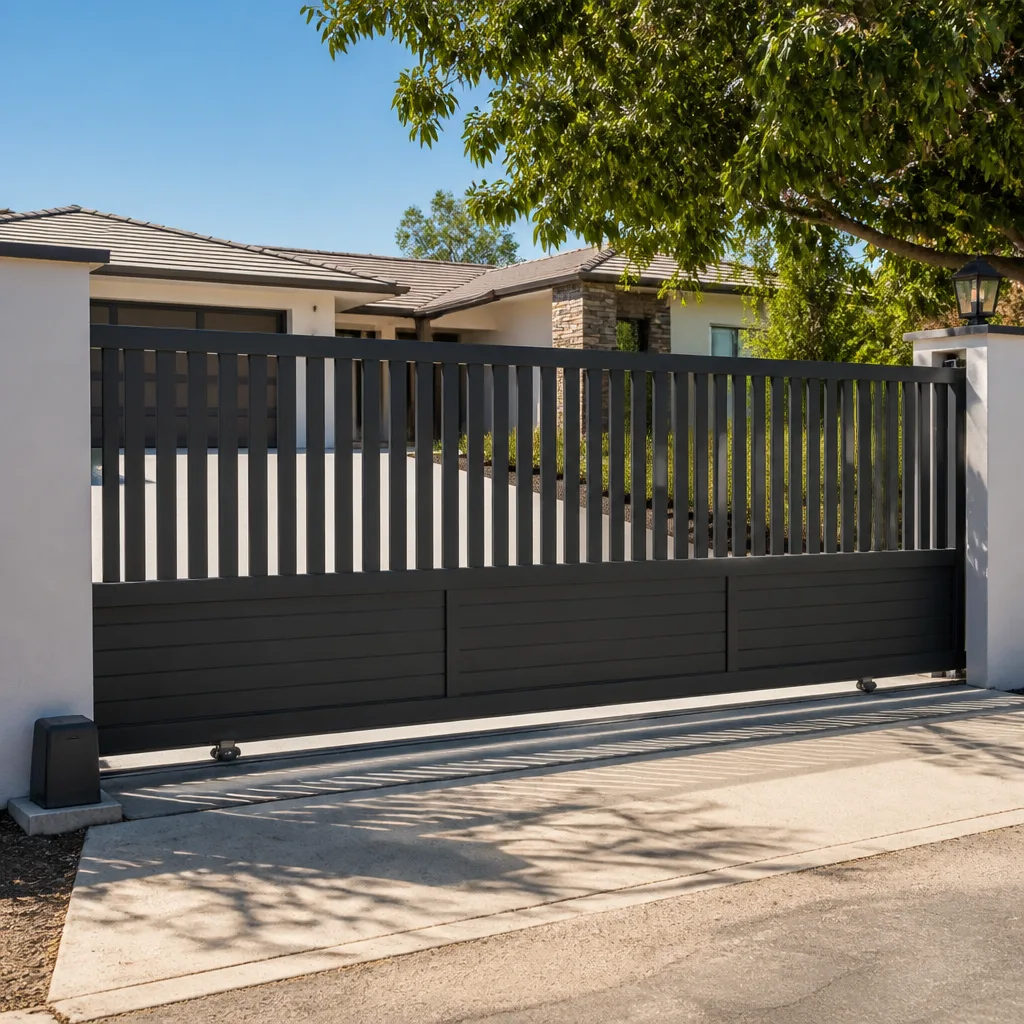 Sliding driveway gates
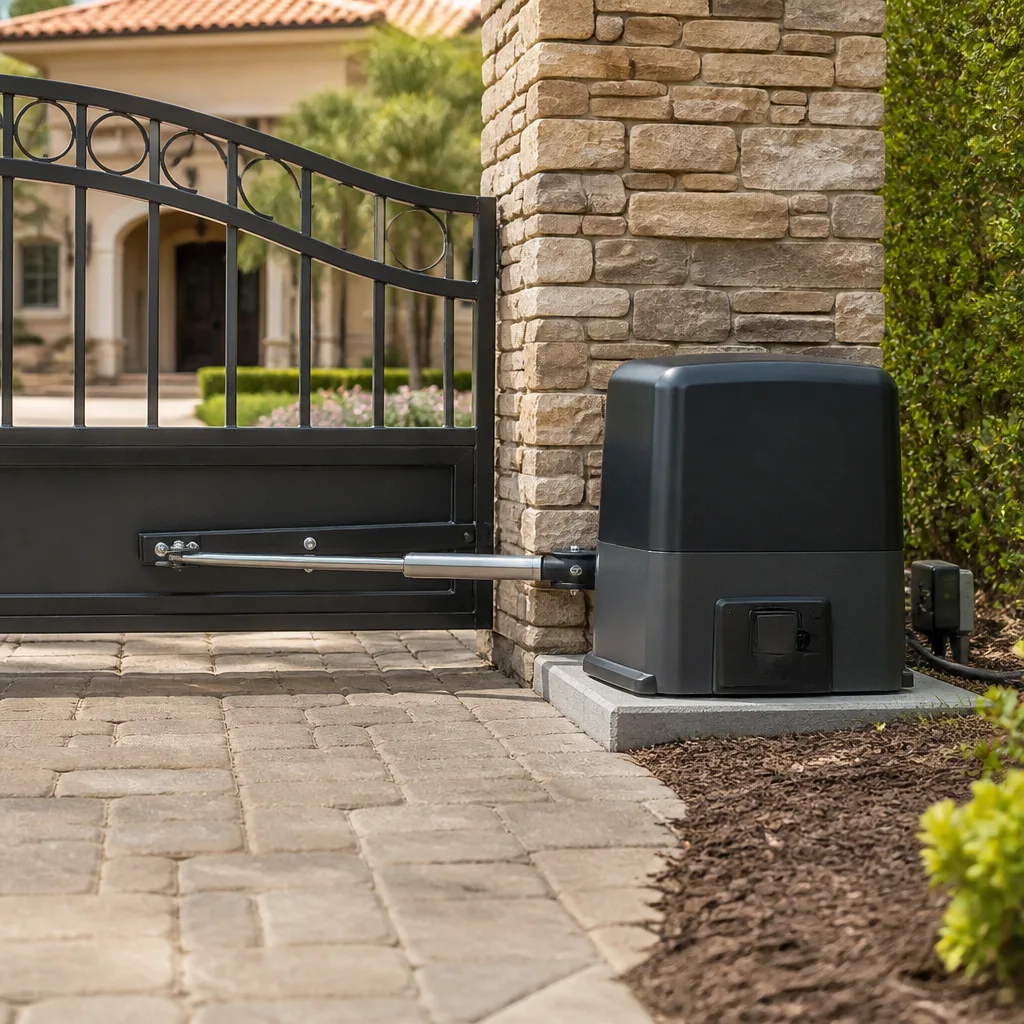 LiftMaster operators
Free on-site gate assessment - hinges, posts, and your LiftMaster or Nice gate operator checked before anything is quoted
The assessment is free and the quote is the invoice.
Get your free estimateThe Complete Guide to Gate Repair in Las Vegas
Las Vegas gets roughly 294 sunny days a year, and every one of them is slowly destroying your gate’s wiring, seals, and finish in ways that won’t show up until the gate stops mid-swing at 10 PM. Most DIY vs Professional Gate Repair: The Las Vegas Homeowner’s Decision Guide resources you’ll find online were written for suburban New Jersey or coastal California, places where gates fail because of rust, rain, and freezing winters. Las Vegas is different. The failures here are driven by UV radiation that turns plastic wire insulation brittle, summer heat cycles that warp steel, and caliche soil that shifts posts seasonally. This guide breaks down every common Las Vegas gate failure, maps it back to its root cause, and tells you what a real fix looks like so you stop paying for repairs that only last six months.
Styles & brands we work with
Quick Answer
Gate repair in Las Vegas typically costs between $150 and $450 for common opener and hinge fixes, with full opener replacements running $850 to $2,400 depending on brand and motor type. Most repairs can be completed same day or next day because Las Vegas gate companies keep parts in stock for the brands that dominate this market, but the real key is diagnosing the desert-specific root cause: UV-damaged wiring, heat-fatigued circuit boards, or posts shifted by caliche soil. Calder Gate Repair Las Vegas gives you a written price before any work starts, so you never face a surprise invoice at the door. For a free estimate, call (725) 220-0280.
Table of Contents
- Why Las Vegas Gates Fail Differently Than Anywhere Else
- Caliche Soil and Expansive Clay: The Hidden Post Problem
- Which Gate Opener Brands Handle the Desert Heat Best
- HOA Gate Rules in Clark County: What You Can and Can’t Do
- How to Read a Gate Repair Estimate Line by Line
- The Six Most Common Gate Failures We See in Las Vegas
- What You Can Check Yourself vs. What Needs a Pro
- Common Mistakes to Avoid
- When to Call a Professional
- Frequently Asked Questions
- The Bottom Line
Why Las Vegas Gates Fail Differently Than Anywhere Else
A gate in Las Vegas endures conditions that simply don’t exist in most of the country. Summer highs above 110°F with direct sun on metal surfaces that reach 150°F or more. UV indices of 10 or 11 through most of June, July, and August. Annual rainfall under 5 inches, sometimes under 2. Large temperature swings, from 110°F at 4 PM to 75°F at 4 AM, which means the metal and plastic on your gate expand and contract every single day. Over a decade, that daily flexing is what causes hinges to sag, weld points to crack, and circuit boards to develop micro-fractures.
Here’s what we see in Las Vegas that gate repair companies from other markets rarely deal with:
- UV-brittle wiring insulation. The plastic jacket on low-voltage wire rated for shaded, temperate climates deteriorates in 3 to 5 years under constant Las Vegas sun. Once the insulation cracks, moisture from sprinklers or monsoon-season humidity gets in and corrodes the copper. The result is intermittent opener failure, a gate that works sometimes and not others.
- Heat-fatigued control boards. Most opener circuit boards are rated to 140°F or 150°F ambient. Inside a metal opener box mounted on a gate that sits in direct sun, internal temperatures exceed that rating daily during summer. Capacitors swell, solder joints weaken. A board that would last 15 years in Ohio might fail in 6 years in Las Vegas.
- Warped steel frames. Thin gauge steel, often used on budget gate installations, expands enough during extreme heat that it can twist or bow when restrained by hinges. Once a gate frame warps, no amount of hinge tightening will fix the sag.
- Rubber seal degradation. The rubber edge seals and weatherstripping on gates crack and crumble within 2 to 3 years in Las Vegas, compared to 8 to 10 years in temperate climates. Once seals are gone, dust and debris work into hinge bearings and track hardware, accelerating mechanical wear.
This is why gate repair in Las Vegas requires a different diagnostic approach than what a generic YouTube tutorial or a contractor from out of state might apply. We’re not looking for rust, we’re looking for sun damage, heat stress, and soil movement. Since 2009, Calder Gate Repair Las Vegas has been part of the Relay Home Co. family, and every single technician we send out is trained specifically on these desert failure modes. The fixes that work here cost more upfront sometimes, because you use stainless steel hardware and UV-rated wire, but they last years longer than the band-aid approach.
Caliche Soil and Expansive Clay: The Hidden Post Problem
Here’s something most Las Vegas homeowners don’t realize: the soil under your gate posts is not static. It moves with the seasons, and it moves enough to throw off gate alignment even when the gate was installed perfectly.
Caliche is a hardened layer of calcium carbonate that forms under many parts of the Las Vegas Valley. It’s hard as concrete in some spots, and it sits under a layer of looser topsoil. When gate posts are set in concrete footings that don’t penetrate through the caliche layer, the footing essentially floats on top of it. During temperature swings and after the rare heavy rain event, that floating layer shifts. The post tilts. The gate sags. The latch stops lining up.
Las Vegas also has pockets of expansive clay soil, particularly in older neighborhoods and areas near washes. Expansive clay absorbs water and swells, then shrinks when it dries out. In a city with extreme dry periods punctuated by sudden monsoon storms, this swelling-shrinking cycle happens rapidly and repeatedly. Gate posts set in concrete footings can be pushed upward or tilted by soil movement of half an inch or more, which is enough to bind a gate or prevent it from closing fully.
What this means in practice for a homeowner:
- A gate that slowly gets harder to open over 2 to 3 years is probably not a hinge problem. It’s a post alignment problem. The hinges are fine. The post has moved.
- Replacing hinges on a misaligned gate is a temporary fix. It might work for a few months until the post shifts again. The actual fix is resetting the post, often with a deeper footing and sometimes with a larger diameter footing that spans stable soil layers.
- Post movement can damage the opener too. When the gate is out of alignment, the opener motor has to work harder on every cycle. That extra load shortens motor life and can burn out capacitors and drive gears early.
If you’re in neighborhoods like Summerlin, Centennial Hills, or Green Valley, the soil composition varies from block to block. It’s not unusual for us to see one house with rock-solid posts and the house three doors down with chronic alignment problems. We’ve been dealing with Las Vegas soil since 2009, and we can usually tell within the first five minutes of looking at a gate whether the problem is mechanical or whether the ground underneath it is winning.
Which Gate Opener Brands Handle the Desert Heat Best
Not all gate openers are equal under Las Vegas sun. Over the years, Calder Gate Repair Las Vegas has repaired and replaced thousands of openers across the valley, and the pattern is clear: some brands and models are built with heat-tolerant components and UV-stable housings, while others are engineered for coastal climates and degrade quickly here.
We work on nine major brands: LiftMaster, FAAC, BFT, Linear, Viking, Ghost Controls, DoorKing, Elite, and Mighty Mule. Here’s what we’ve learned about how a few of them perform in desert conditions:
LiftMaster
LiftMaster is the most common brand in Las Vegas residential gates, and for good reason: their swing and slide opener motors are robust, parts are readily available locally, and their newer control boards handle heat better than most competitors. The weak point on older LiftMaster units is the plastic limit switch housing, which fails after years of heat cycling. If you have a LiftMaster that runs fine but doesn’t stop at the right spot, that’s the likely culprit.
Mighty Mule
Mighty Mule is the DIY favorite, sold at big box stores and marketed for easy self-installation. For light gates in shaded areas, they’re fine. For heavier gates in full sun, they’re underbuilt. The plastic gear housing gets brittle, and the control board often fails within 3 to 4 years in Las Vegas conditions. We replace more Mighty Mule openers than any other brand, usually because the gate was heavier than the unit’s duty rating and the desert heat finished the job.
Ghost Controls
Ghost Controls openers are popular for battery-powered solar applications where running AC power isn’t feasible. The solar charging system is actually a good fit for Las Vegas sun. But the batteries degrade faster in extreme heat, and the wireless safety sensor system can get flaky when temperatures exceed 110°F. If you’re using Ghost Controls in Las Vegas, we recommend checking battery health every spring before the hottest months hit.
FAAC and BFT
FAAC and BFT are Italian brands common in higher-end residential and commercial gate installations. They’re well-engineered, and their hydraulic operators hold up well to heat because they don’t rely on electric motors working against heavy loads. The tradeoff: parts are more expensive and sometimes need to be ordered, which means longer repair timelines if something unusual fails. Their control boards are also more sensitive to power surges, which happen during Las Vegas monsoon storms.
Linear and Viking
Linear and Viking are workhorse brands in the multi-family and light commercial segment. The older Linear models are nearly bulletproof mechanically but their transformer and capacitor boards fail with age and heat. Viking’s newer models have better heat-rated components, but we’ve seen issues with their display panels in direct-sun installations where the LCD degrades after a few summers.
If you have a specific brand and you’re not sure whether it’s worth repairing or replacing, call us at (725) 220-0280. We’ll give you an honest assessment based on what we’ve seen in Las Vegas specifically, not what the manufacturer’s spec sheet says.
For more detail on opener-specific problems, see our guide to gate opener repair in Las Vegas.
HOA Gate Rules in Clark County: What You Can and Can’t Do
If you live in a Las Vegas community with an HOA, and most newer neighborhoods in the valley have one, your gate is subject to rules you may not have read. Before you replace a gate, change a finish color, or upgrade to an automated opener, check your CC&Rs. Here’s what trips up Las Vegas homeowners most often:
- Gate height and style restrictions. Many Las Vegas HOAs restrict front-facing gates to specific heights, typically 4 to 6 feet, and require styles that match the community aesthetic. Wrought iron with specific picket spacing is common. If your repair involves replacing a gate panel, it has to match.
- Finish color matching. HOAs in Las Vegas often have approved color palettes. Matte black and dark bronze are common, but the specific shade matters. If you repaint your gate after a repair and pick a slightly different black than the approved spec, you may get a violation letter.
- Automation restrictions. Some Las Vegas HOAs restrict gate openers to certain types or brands, especially in communities where the gate faces a shared driveway or where noise is a concern. Hydraulic openers are quieter, swing arms can be visible, and a few HOAs have rules about which type is acceptable. If your repair involves replacing the opener, check first.
- Solar panel placement. If you’re using a solar-powered opener, the panel placement may be regulated. Some HOAs don’t allow solar panels on front-facing structures at all.
Clark County itself has some regulations too. Gates that swing outward onto a public sidewalk or street may need permits and often require a specific setback. Gates that are part of a pool enclosure have separate safety requirements, including self-closing and self-latching mechanisms. If a gate serves as a pool barrier, the repair cannot alter its closing speed or latching function in any way.
The rule of thumb: if you’re repairing an existing gate in kind, no HOA approval is usually needed. If you’re changing the gate, the opener, the color, or the automation, get written approval first. We’ve seen too many Las Vegas homeowners pay for a beautiful new gate only to receive an HOA violation notice the next week. If you’re unsure, your community’s management office will give you the specifics.
How to Read a Gate Repair Estimate Line by Line
Here’s the part most homeowners skip: actually understanding what’s on the estimate. They see a number, they approve it or they don’t, and they never look at the line items. That’s how you end up paying $400 for a hinge replacement when the real problem was a shifting post that’ll throw the gate out of alignment again in three months.
Let’s walk through a typical gate repair estimate, line by line, and talk about what each part means and what to watch for.
Line 1: Labor
Labor should be listed as a specific scope of work, not just “labor” with a lump sum. A good estimate says something like “Remove and reinstall gate panel, adjust hinges, re-align latch.” That tells you exactly what the technician will do. If the line just says “labor” and the number is vague, ask for specifics. In Las Vegas, expect labor rates of $95 to $150 per hour for gate repair, depending on the complexity and whether it’s an emergency call.
Line 2: Parts
Parts should be itemized. If the parts line says “parts” with a round number, that’s a red flag. You want to see the actual part name and usually the brand. “Limit switch” or “hinge bearing” or “capacitor.” If a control board is being replaced, the brand and model should be listed. A reputable Las Vegas gate repair company will use brand-name parts, not generic substitutes, because generic parts fail faster in desert heat.
Line 3: Trip charge or diagnostic fee
Some companies charge a separate trip charge, usually $75 to $125 in Las Vegas, which may or may not be waived if you proceed with the repair. At Calder Gate Repair Las Vegas, the estimate is free, and the diagnostic is included when you have us do the work. Our customers know their written price before any work starts, always.
Line 4: Material or consumables
This covers things like hardware, wire connectors, sealant, and mounting bolts. It should be a small number, usually $20 to $50. If you see a big material line item without explanation, ask what it covers.
The trap: the “just the cheap part” fix
Here’s the trap we see most often in Las Vegas. A gate is sagging. The contractor quotes a hinge replacement for $250. The hinges get replaced. The gate swings easier for a few weeks, then the sag comes back, because the actual problem was the post shifting in caliche soil. The hinge replacement was cheap and fast, but it didn’t fix the root cause. The customer paid $250 and now needs the $800 post reset they needed all along.
To avoid this, ask one question: “What is causing the problem, and will this fix address that cause?” If the answer is vague, get a second opinion. A good estimate explains the root cause, and the line items map back to it. For our electric gate repair estimates, we always document what we found, what we’re fixing, and why, in writing, before you approve anything.
The Six Most Common Gate Failures We See in Las Vegas
After 15-plus years of gate work in Las Vegas, these are the failures we see over and over. If your gate is misbehaving, it’s probably one of these.
1. Opener runs but gate doesn’t move
You hear the motor humming, but the gate stays put. This usually means a broken drive gear or a drive chain that’s come off the sprocket. On swing arm openers, it can also mean the arm has detached from the gate bracket. Parts cost: $80 to $250 depending on the brand. Labor: usually 1 to 2 hours.
2. Gate stops mid-swing or reverses for no reason
This is almost always a sensor issue or a control board setting problem. Safety sensors get dirty, misaligned, or obstructed by weeds and debris. In Vegas, dust on sensor lenses is a constant problem. Sometimes it’s the limit switch, the small sensor that tells the gate when to stop. Most of the time this is a $120 to $200 fix.
3. Gate opens but won’t close
If the gate opens fine but won’t close, the photo eye sensor is usually the culprit. Something is blocking the beam, the sensor is dirty, or the wiring to the sensor is UV-damaged and shorting. This is one of the most common heat-related failures we see.
4. Remote stopped working
Before you assume the opener is dead, check the remote battery. It sounds obvious, but roughly 20% of our “opener won’t respond” calls in Las Vegas are dead batteries. If a new battery doesn’t fix it, the receiver board may have failed. Heat kills receiver boards eventually. A new receiver or board runs $150 to $400 depending on the brand.
5. Gate is sagging or scraping the ground
Sagging is almost always hinge wear or post movement. If the hinges are original and the gate is heavy, hinge pins wear out and the gate drops. If the hinges look fine but the gate sags near the latch side, the post is likely shifting. Hinge replacement: $200 to $500. Post reset: $600 to $1,200 depending on footing size and soil conditions.
6. Gate opens by itself or closes on its own
This one is concerning because it’s a safety issue. Usually it’s a frequency interference problem, a shorted wire, or a control board that’s failing. If your gate is moving without being commanded, disable the opener and call a professional. This is not a DIY fix.
What You Can Check Yourself vs. What Needs a Pro
Some gate issues are safe and easy to inspect yourself. Others involve high-tension springs, heavy gate panels, or electrical wiring, and they need a trained technician. For more guides & resources, here’s a practical split.
What you can check yourself (safe)
- Remote battery. Replace it first. It costs $2 and takes 30 seconds.
- Photo eye sensors. Look for dirt, cobwebs, weeds, or anything blocking the lenses. Wipe them with a dry cloth.
- Visible damage. Walk the length of the gate and look for bent metal, cracked welds, loose bolts, or wires hanging out of the opener box.
- Track obstruction. On sliding gates, check the track for debris, rocks, or hardened dirt. Las Vegas dust storms can fill a track with grit in a single afternoon.
- Battery backup status. If your opener has a battery backup, check the indicator light. If it’s flashing, the battery may be dead and need replacement.
What needs a professional (don’t attempt these)
- Any spring under tension. Gate opener springs, tension springs on cantilever gates, and torsion springs on overhead gates store enormous energy. If one lets go while you’re working on it, the result can be catastrophic. Do not remove or adjust them yourself.
- Electrical wiring inside the opener box. Gate openers run on 110V or 220V in many cases. Opening the control box and poking around with a screwdriver without knowing what you’re doing is dangerous. We’ve seen fried boards and live wires from DIY attempts.
- Heavy gate panel removal. A solid steel gate panel can weigh 400 to 800 pounds. If it comes off its hinges while you’re working, you will not catch it. This is how people get seriously hurt.
- Post resetting. Digging out a gate post that’s set in concrete and caliche is heavy work requiring proper equipment and usually a new concrete pour. Doing this wrong means the post will sink or shift again within months.
- Control board diagnosis. Without a multimeter and schematic knowledge, you’re guessing. The wrong guess can fry a $300 board or cause the gate to open and close unexpectedly.
If your gate involves any of these, call (725) 220-0280 and we’ll send a uniformed, background-checked technician with a trackable arrival time. That’s the Relay Standard: live arrival time, before-and-after photos, and a digital invoice you pay from a link.
Common Mistakes to Avoid
- Ignoring a slow gate for months. If your gate is moving slower than it used to, something is wrong: a failing capacitor, a binding hinge, a misaligned track. The longer you wait, the more expensive the fix gets. Las Vegas heat accelerates every mechanical problem.
- Lubricating everything with WD-40. WD-40 is a solvent, not a lubricant. It strips away grease and leaves metal dry. Use a proper silicone-based or lithium grease lubricant on hinges and chains. In desert conditions, dry metal wears faster.
- Replacing the opener before checking the gate itself. If your gate is heavy, misaligned, or binding, a new opener will die prematurely too. Fix the gate first, then evaluate the opener. We see homeowners in Summerlin and Henderson replace a $1,000 opener only to burn it out in two years because the gate was the actual problem.
- Choosing the cheapest quote without reading the line items. The cheapest quote often means the contractor is replacing only the failed part and not the cause. In Las Vegas, where soil movement and UV damage drive most failures, a shortcut fix often fails again within a year.
- Skipping HOA check before a visible change. Replacing a gate or repainting it without HOA approval can cost you a violation fee plus the cost of redoing the work. In Las Vegas HOAs with strict aesthetic rules, this happens constantly.
- Not asking about warranty specifics. “We guarantee our work” with no specifics means nothing. Ask what the warranty covers, how long it lasts, and what happens if the repair fails. At Calder, it’s written: the 365-Day Done Right Promise means if the repair fails within 365 days, we return at no charge.
When to Call a Professional
Call a professional when the gate won’t stay closed, when the opener makes grinding or clicking noises, when the gate moves on its own, or when any spring, hinge, or post shows visible damage. If the gate is part of a pool enclosure, any repair that affects closing speed or latching is a safety and legal issue that requires immediate attention. If you’ve had the same problem repaired twice in the last 18 months, the root cause hasn’t been found. Get a second opinion from someone who knows Las Vegas conditions. Calder Gate Repair Las Vegas offers free estimates in Las Vegas and throughout the valley. Call (725) 220-0280 and you’ll talk to a live person, not a voicemail, any hour of the day or night.
Frequently Asked Questions
Most gate repairs in Las Vegas run between $150 and $450 before parts, depending on the complexity of the diagnosis and the repair. A full opener replacement typically costs $850 to $2,400 depending on the brand and motor type. At Calder Gate Repair Las Vegas, every customer gets a written price before any work starts so the invoice never surprises you. Call (725) 220-0280 for an exact quote, estimates are free.
In most cases, yes. We carry parts for the nine major opener brands, and we dispatch same-day in Las Vegas when the call comes in before mid-afternoon. Our technicians arrive with a live, trackable arrival time, so you know exactly when we’ll be there.
We repair and replace LiftMaster, FAAC, BFT, Linear, Viking, Ghost Controls, DoorKing, Elite, and Mighty Mule. That covers virtually every residential gate opener in Las Vegas. If you have something unusual, call us and we’ll identify it and tell you honestly whether we can source parts.
The top causes we see are UV-damaged wiring insulation, heat-fatigued control boards, and gate posts that shift seasonally in caliche soil or expansive clay. These are desert-specific failure modes that generic repair guides don’t address, and they’re why a fix that works in another state may not hold up here.
Repairs that restore the existing gate to its original condition usually don’t require HOA approval. Replacing a gate panel, changing the finish color, upgrading the opener, or adding solar panels usually does. Check your CC&Rs before any visible change to avoid a violation letter. Your community management office will have the specifics.
It’s the written guarantee from Calder Gate Repair Las Vegas that covers every repair we complete. If the repair fails within 365 days, we return and fix it at no charge. No fine print, no diagnostic fee to determine that the failure is covered. It’s stated in writing on every job. That’s part of the Relay Standard, along with a live arrival time, before-and-after photos, and a digital invoice you pay from a link.
The Bottom Line
Gate repair in Las Vegas is a different animal than anywhere else in the country. The sun, the heat, and the soil are working against your gate every day, and the failures they cause look different from what generic guides describe. Understanding your gate’s brand, your soil conditions, your HOA rules, and what’s actually on your estimate is the difference between a repair that lasts years and one that buys you six months. When your gate stops working, you want a technician who knows Las Vegas conditions and who puts the price in writing before turning a single bolt. That’s what we do at Calder Gate Repair Las Vegas. Call (725) 220-0280 for a free estimate any time. A live person answers, day or night.
Written by Nico Alvarez, Owner at Calder Gate Repair Las Vegas, serving Las Vegas since 2009.
See the difference
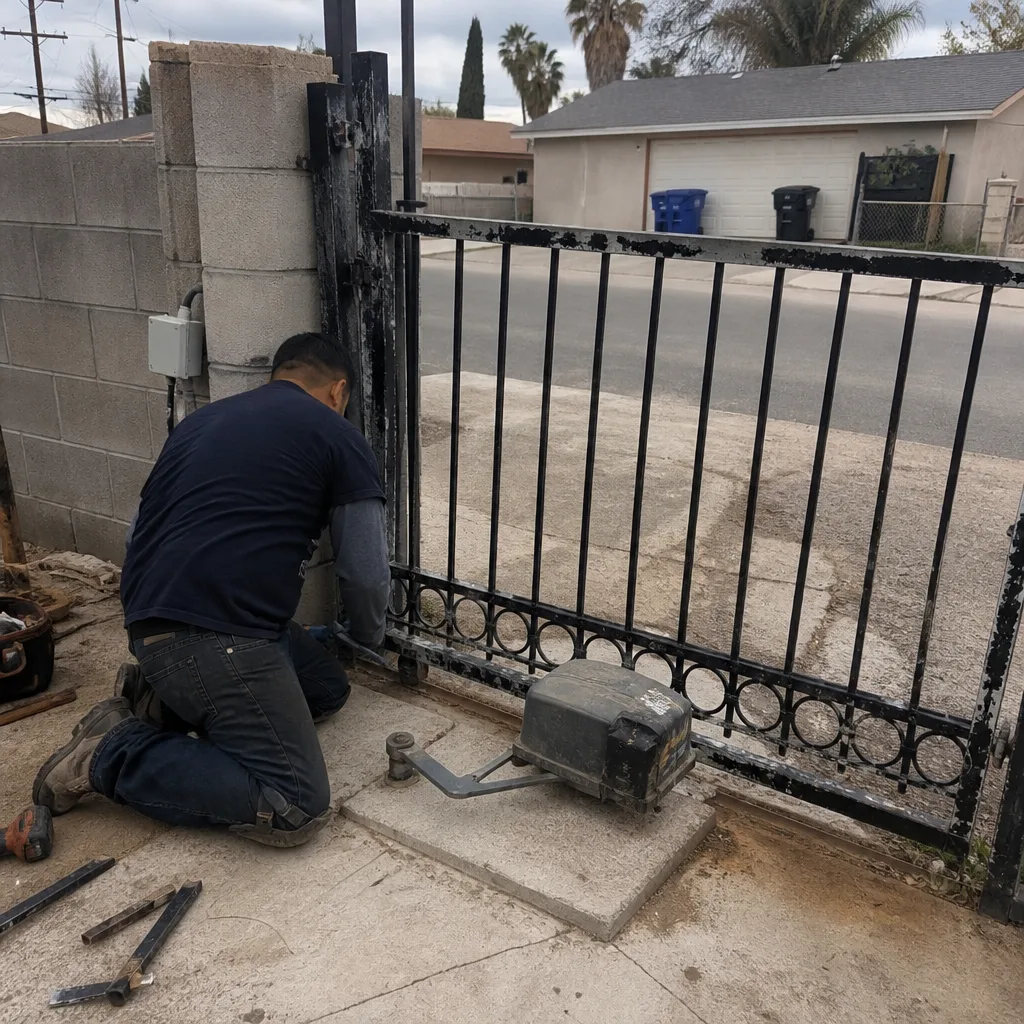 Before
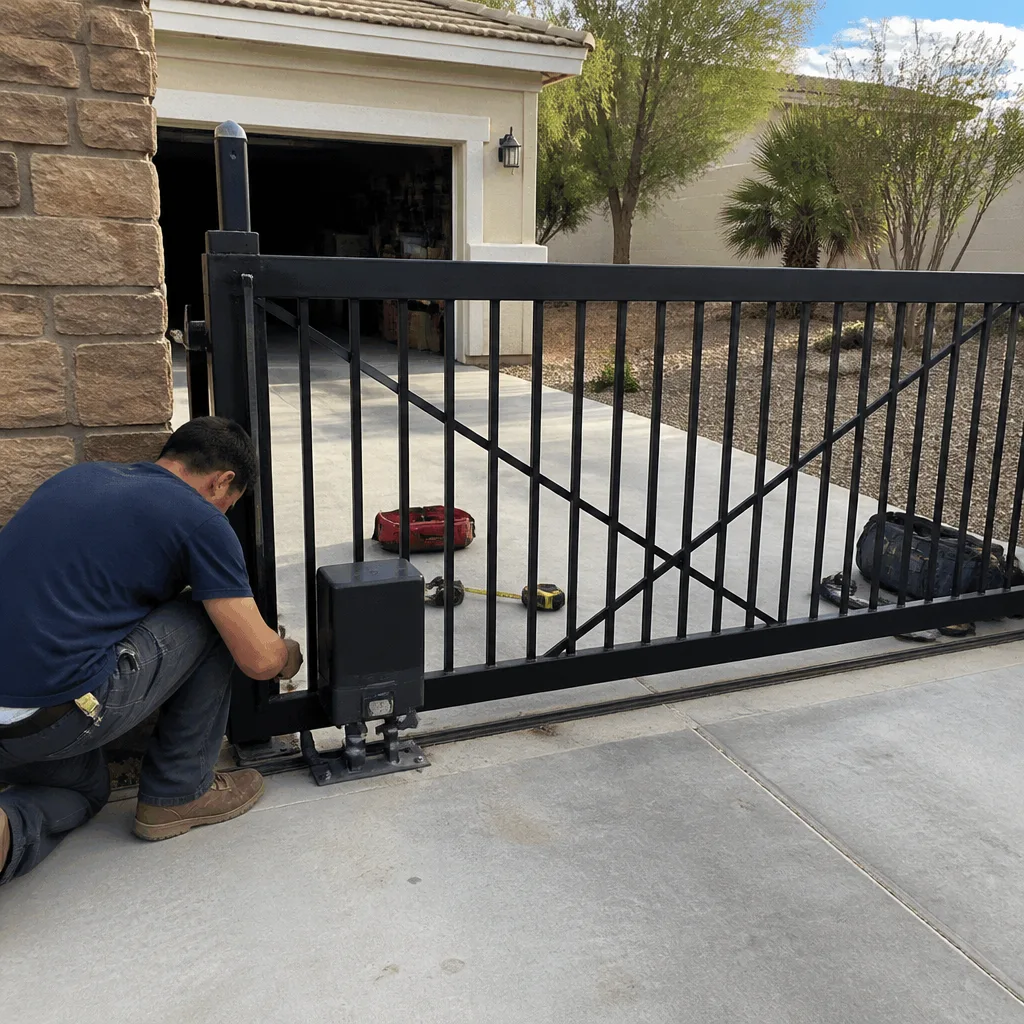 After
After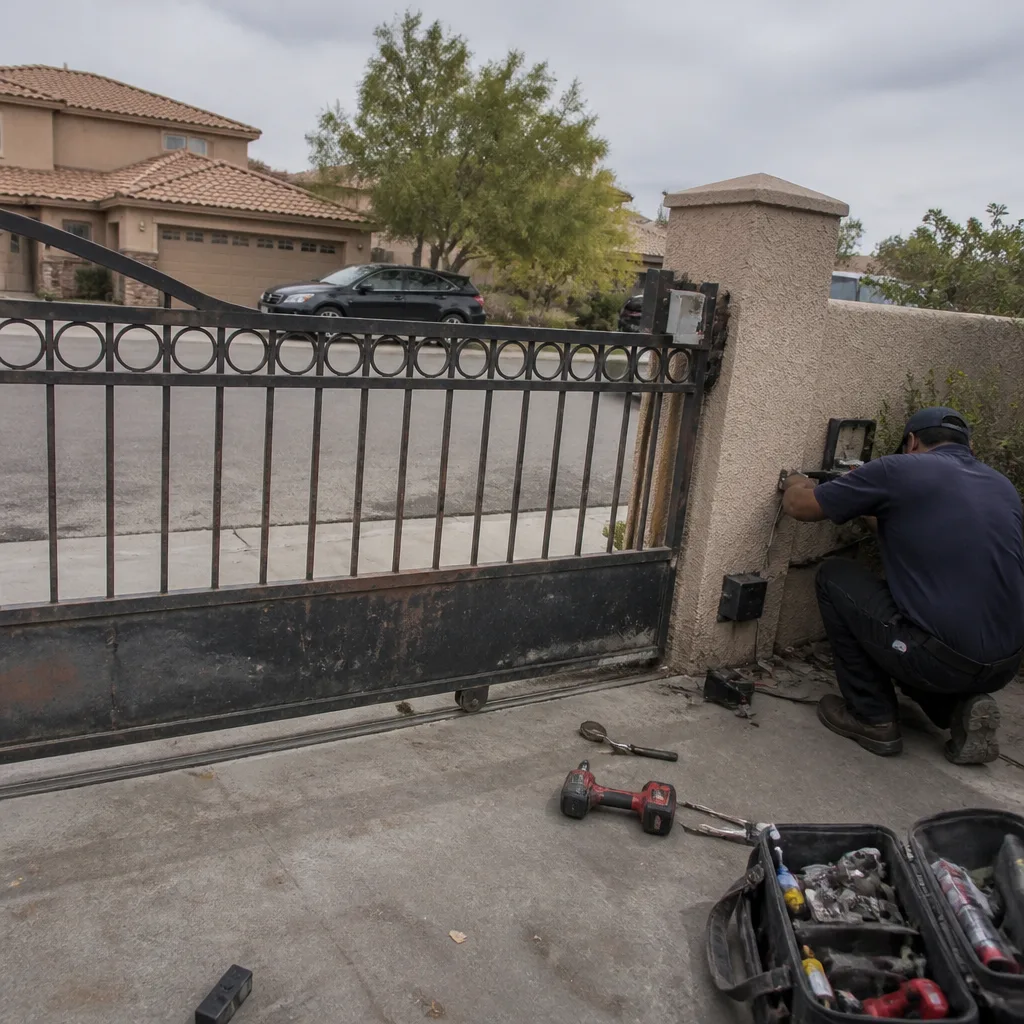 Before
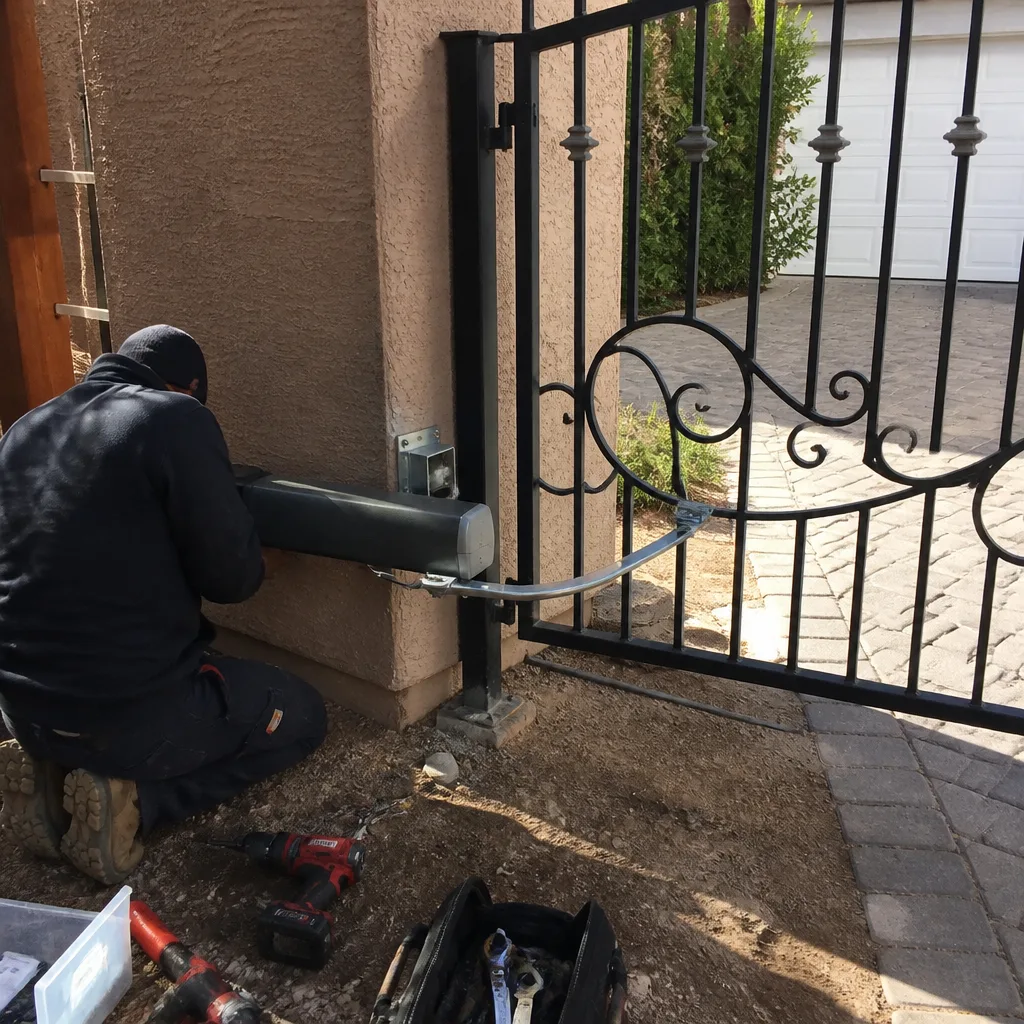 After
After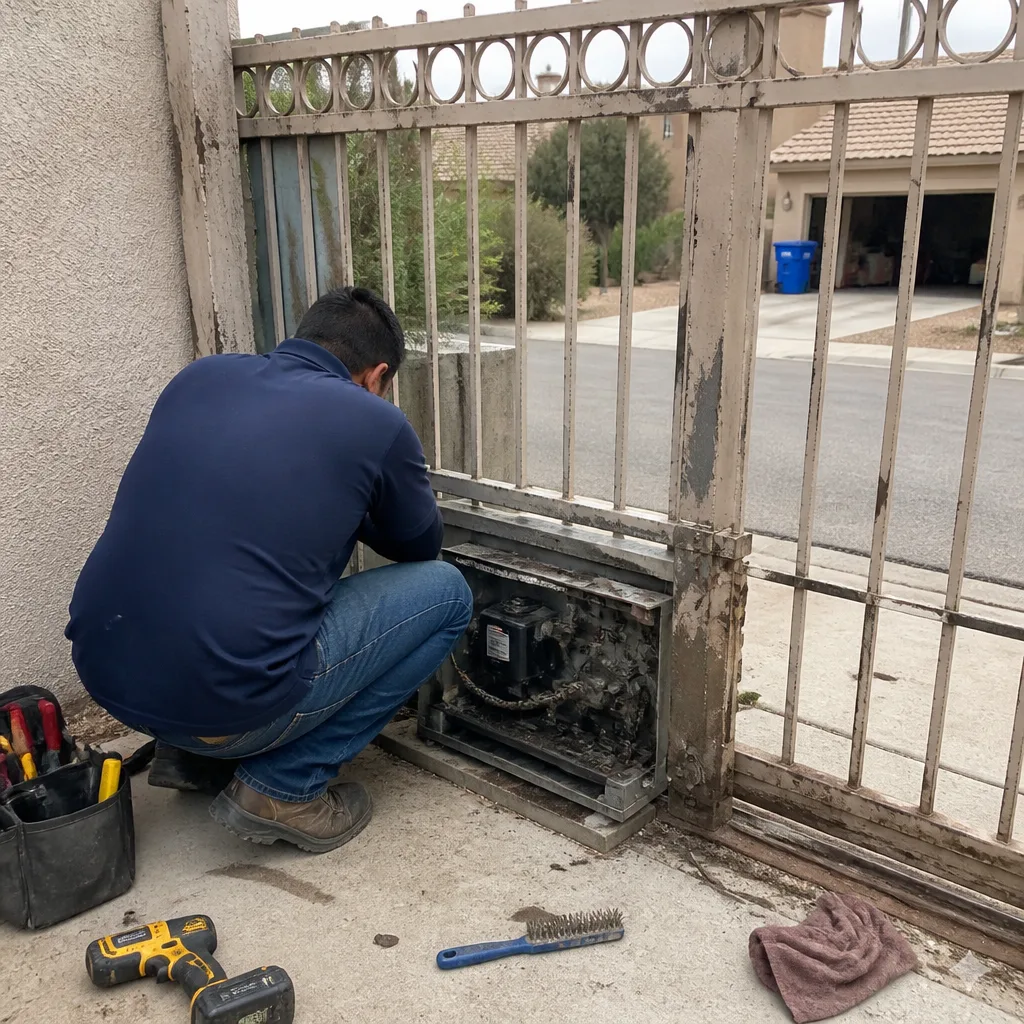 Before
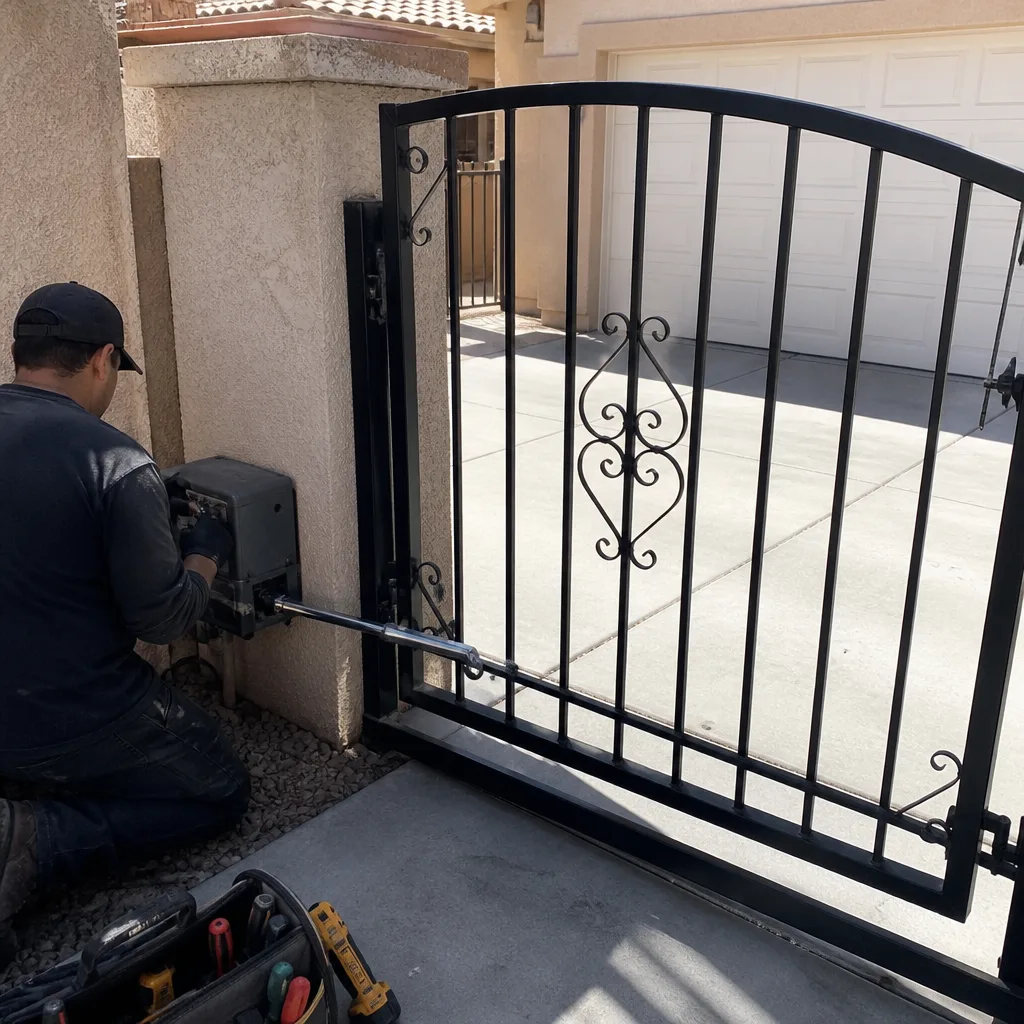 After
After