
Last updated October 16, 2026
 Wrought iron
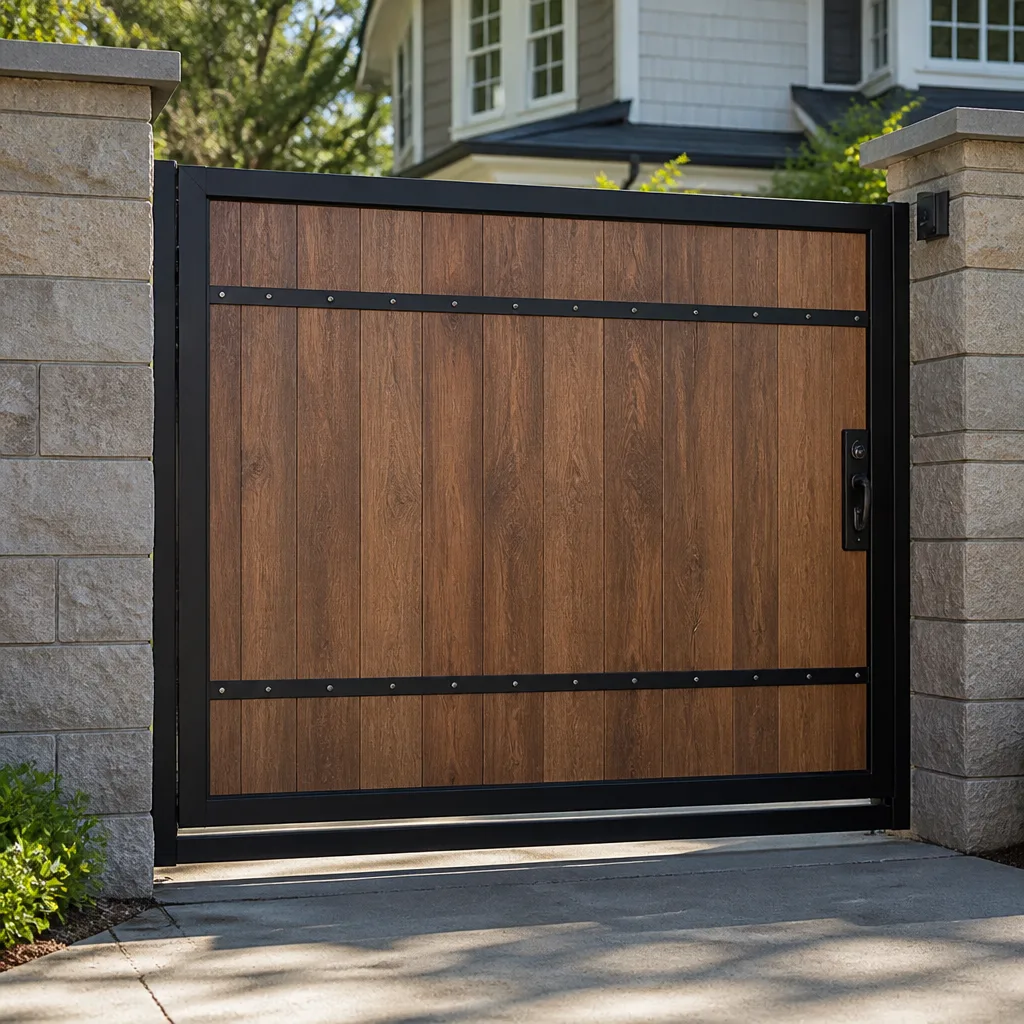 Wood & steel frame
 Farm & ranch
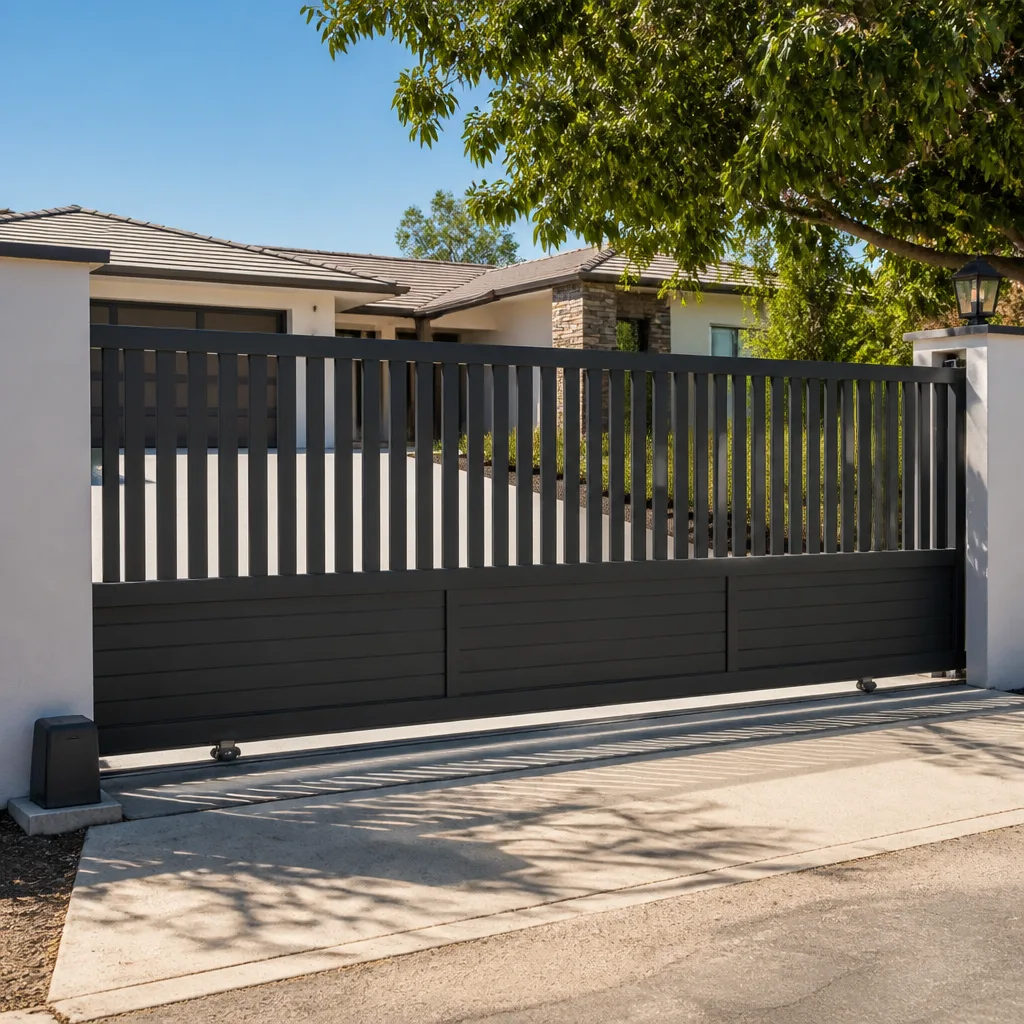 Sliding driveway gates
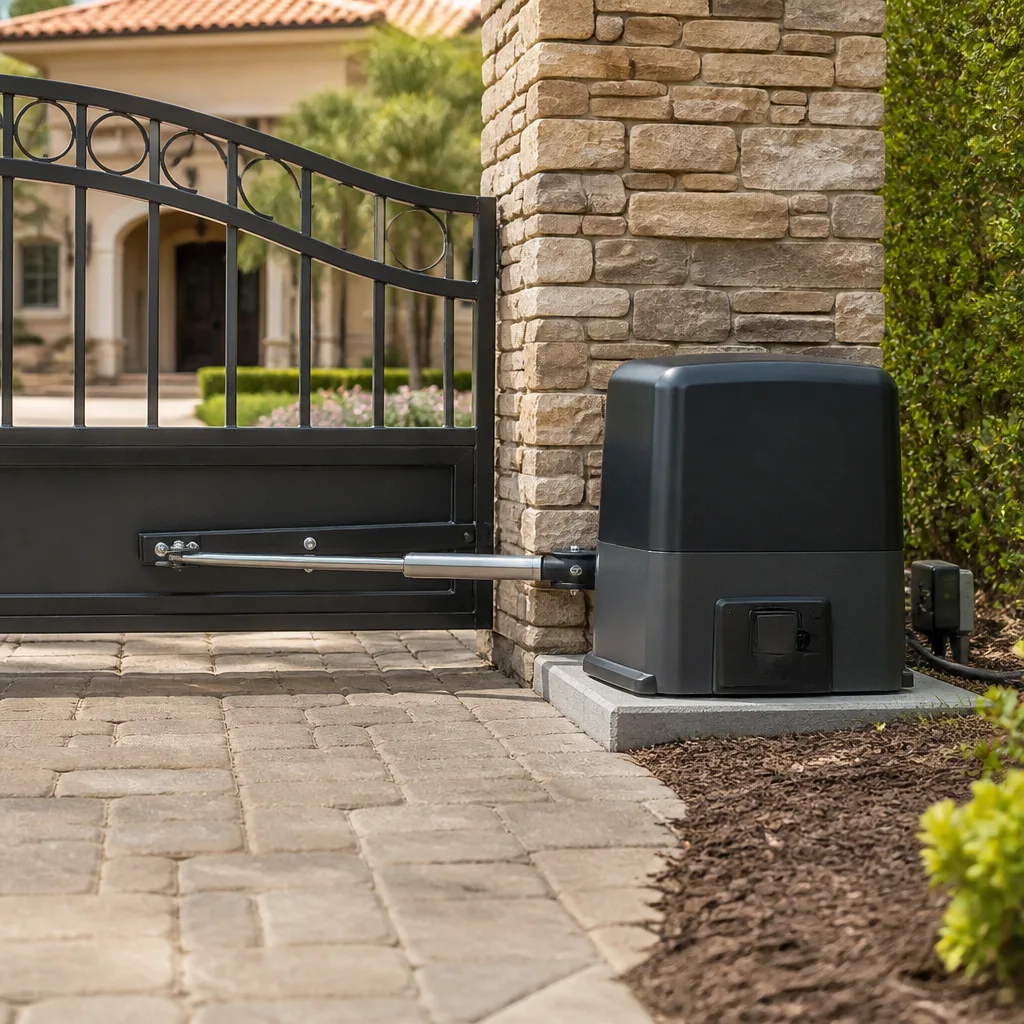 LiftMaster operators
Free on-site gate assessment - hinges, posts, and your LiftMaster or Nice gate operator checked before anything is quoted
The assessment is free and the quote is the invoice.
Get your free estimateGate Repair Maintenance Checklist for Las Vegas Homeowners
Every generic gate maintenance guide you’ll find online was written for a place with rain and mild summers. Las Vegas is different. Here, a thin coat of standard lithium grease on your opener’s rail will bake into a gummy paste by mid-July, and the fine alkaline dust that blows through Summerlin and Henderson works its way into limit switch housings the way sand finds its way into everything else. Most Las Vegas gate failures aren’t caused by neglect in the traditional sense; they’re caused by homeowners following advice that was never meant for the Mojave. This guide is the checklist we would hand a neighbor in Las Vegas: built around dust, heat, and monsoon season, with numbers attached to each task. No vague hand-waving, no “check occasionally.”
Quick Answer
The short version for Las Vegas homeowners: a gate maintenance routine here runs on a monthly, quarterly, and annual schedule, and your three real enemies are fine desert dust, sustained 110°F-plus surface heat, and the July-to-September monsoon cycle. The highest-leverage monthly task is cleaning your safety sensor lenses and checking the gate-to-post clearance at both the morning and mid-afternoon positions; the highest-leverage quarterly task is inspecting your limit switch housings for dust ingress; and the highest-leverage annual task is rerunning the full thermal expansion check and testing ground fault protection before the first monsoon storm. If your gate has lived in Las Vegas for more than three years and you’ve never once cleaned the sensor eyes, start there today.
Styles & brands we work with
Table of Contents
- The Las Vegas Lubricant Problem: What Actually Survives 110°F
- The Dust and Fine-Particulate Inspection Protocol
- Monsoon-Season Prep: July Through September
- The Thermal Expansion Check: Morning vs. Mid-Afternoon Clearance
- Torque Specs and Clearance Tolerances That Actually Matter
- The Monthly, Quarterly, and Annual Schedule for Las Vegas
- Common Mistakes to Avoid
- When to Call a Professional
The Las Vegas Lubricant Problem: What Actually Survives 110°F
Here’s the counterintuitive opening fact: the most common gate lubricant sold at big-box stores is also one of the worst choices for Las Vegas. Standard lithium grease, the white or gray spray-on product recommended in most generic gate checklists, starts softening before 200°F. That sounds safe until you realize the surface temperature of a dark metal gate rail sitting in direct sun in Summerlin on a 112°F day can easily reach 160°F to 175°F. Openers mounted inside metal housings with no ventilation get even hotter.
What happens in practice is predictable: the grease thins, drips, and by capillary action migrates into the motor housing and across the circuit board. Wiring connections corrode. The same lubricant that was supposed to keep the gate moving becomes the thing killing the opener. We have replaced opener motors in Las Vegas where the only identifiable failure cause was lithium grease that had pooled inside the casing.
For Las Vegas, you want one of two things: a synthetic dry-film lubricant with PTFE or molybdenum disulfide for rails and chains, or a silicone-based spray specifically rated for use above 200°F. Apply a thin coat, then wipe almost all of it off. The surface should feel dry to the touch. If your finger comes back greasy, you’ve applied too much, and summer will remind you of that mistake in August.
Brand names matter here because not all “dry” lubricants are dry. We’re factory-familiar with opener brands like DoorKing, Elite, Viking, and Ghost Controls, and each manufacturer specifies their own chain and rail lubricants for a reason. A Viking swing arm and a Ghost Controls linear actuator do not share the same friction profile. If your opener manual specifies a lubricant, trust it; if the manual is long gone, use a PTFE-based dry film, never standard white lithium grease.
Las Vegas-specific lubricant rule: if you can scrape a bead of grease off the rail with your fingernail in July, you are lubricating incorrectly. Thin, dry, and clean beats wet and visible every time in this climate.
The Dust and Fine-Particulate Inspection Protocol
Las Vegas gets wind. Not occasionally; routinely. The same haboob that dusts your patio furniture is also pushing fine particulate into every sensor housing, limit switch, and circuit board vent on your gate opener. This isn’t a cosmetic issue. The dust here is alkaline, mildly conductive when damp, and fine enough to bridge narrow electrical gaps. We’ve seen false-triggering safety sensors in Henderson that were simply photography-sensor eyes wearing the desert.
Do this protocol monthly, and more often after any significant wind event:
- Safety sensor lenses: Wipe each lens with a clean, dry microfiber cloth. No water, no glass cleaner. The goal is to remove dust film without introducing moisture.
- Limit switch housings: Remove the small cover if your model allows tool-free access. Blow the interior clean using compressed air or a photographer’s squeeze bulb, not your mouth. Look for accumulated fine dust around the switch contacts.
- Circuit board vents: Inspect any louvers or vents on the opener housing. If dust is caking the vents from the outside, assume it’s also inside. Gentle compressed air from the outside is better than nothing; a professional internal cleaning is better still.
- Photo-eye alignment channels: Many modern openers have a narrow channel where the sensor slides for alignment. Dust packs into this channel and causes the exact slow-drift misalignment that eventually triggers phantom reversal faults.
- Gate track and chain channel: For slide gates, run a dry cloth along the V-groove track. If you see a paste forming (dust plus old lubricant), the track needs to be cleaned and re-lubricated with a dry film, not re-greased.
One Las Vegas-specific note: don’t pressure-wash your gate track or sensor housings to clean them. Water drives the dust deeper and introduces corrosion to the exact components you’re trying to preserve. Dry methods only.
Monsoon-Season Prep: July Through September
Most “gate maintenance checklists” never mention monsoons because the people who wrote them live somewhere that doesn’t have them, so check Gate Repair Permits, Codes & Inspections in NV: What You Need to Know for local requirements. Las Vegas does. Between early July and late September, sudden downpours on hard ground create sheet flow that finds low spots around your gate post bases. If the post base sits in a shallow depression, water pools there. If the post base isn’t properly sealed, water infiltrates. If water infiltrates and your opener’s ground fault circuit isn’t functioning, you get the kind of electrical fault that can ruin an opener board in one storm.
Complete these steps before the first serious July storm, not after it:
- Drainage check around both gate post bases: Get down at ground level and look at the soil or concrete terrain around each post. If you see a bowl shape, a crack aligned toward the post, or standing water after rain, fix the grade or seal the gap. A small bag of exterior grade concrete patch takes thirty minutes.
- Test the ground fault circuit: Find the GFCI outlet or breaker that feeds the gate opener, press the TEST button, and confirm the gate loses power. Then press RESET and confirm it powers back on. If it trips but won’t reset, call an electrician before storm season, not during it.
- Inspect the opener’s weatherproof gaskets: The gasket around the control box lid and the conduit entry points should be intact and pliable. In Las Vegas, UV turns gaskets brittle within a few years. A cracked gasket is an open invitation for monsoon rain.
- Check the battery backup (if any): If your gate opener has battery backup for grid outages, cycle it once and confirm it holds a charge. Power outages during monsoon storms are common. A dead backup is the same as no backup.
Monsoon prep is the most skipped maintenance category in Las Vegas, and it’s the one with the most expensive failure mode. Water-damaged control boards typically aren’t repairable; they’re replaced. The fix-and-replace cost after a flooded board is far higher than the thirty minutes of prep above.
The Thermal Expansion Check: Morning vs. Mid-Afternoon Clearance
Steel expands when it heats. In Las Vegas, the same gate measured at 7 a.m. is measurably longer at 2 p.m. in July. This is not a metaphor; it’s a physical fact with a coefficient of thermal expansion attached. A 16-foot wrought iron gate can gain an eighth of an inch in length between a cool desert morning and a 110-degree afternoon. When the gate-to-post clearance at 7 a.m. is already marginal, that afternoon expansion causes a bind. When a gate binds, the opener motor works harder. When the motor works harder for months, it fails early. The failure isn’t mysterious; it’s arithmetic.
The check itself is simple and takes nine to ten minutes from start to finish:
- Morning measurement: At the coolest part of the day (just before sunrise is best), use a feeler gauge or a simple wooden paint stirrer to measure the gap between the gate edge and the receiver post. Record the reading.
- Afternoon measurement: Between 2 p.m. and 4 p.m. on a day at or above 100°F, measure the same gap. Record the reading.
- Compare the two: If the afternoon gap is visibly narrower than the morning gap, the gate is expanding into the post. If the afternoon gap is below 1/4 inch, you have a pending binding problem.
- If the gate contacts the post: First, check that the post itself hasn’t shifted (posts settle too). Second, check the hinge bolts and gate frame bolts for loosening. Third, if everything is tight and the bind persists, the gate geometry needs adjusting by a professional.
For swing gates, thermal movement mostly affects the latch alignment and the hinge stress. For slide gates, it affects the full length of the track engagement. Both matter. If you have a DoorKing or Elite slide gate opener and you hear it growling only in the afternoon, thermal expansion is a stronger suspect than a failing capacitor.
Most Las Vegas homeowners discover thermal binding because the gate starts reversing at the same time of day, every day. Don’t wait for that symptom; do the measurement once in June and once in August, and you’ll know your thermal behavior before it becomes a problem.
Torque Specs and Clearance Tolerances That Actually Matter
“Tighten loose bolts” is vague. Here are the numbers. These are general values typical of residential gate hardware; always defer to your specific manufacturer’s documentation if you have it.
- Gate hinge bolts (swing gates): 40 to 50 ft-lbs for 1/2-inch hardware. Less than 40 means looseness and sag; more than 50 risks stripping cast aluminum hinge bodies.
- Track bolts on slide gates: 30 to 40 ft-lbs, but do not overtighten. A bolt that deforms the track rail creates a bind that feels like an alignment problem.
- Opener mounting bracket bolts: 25 to 35 ft-lbs. Overtightening here is the most common DIY mistake; a bracket that’s torqued through the housing can crack the opener body.
- Gate-to-post clearance at coolest point of day: 3/4 inch to 1 inch for swing gates, and a track overlap of at least 3 inches for slide gates.
- Gate-to-post clearance at peak afternoon heat: No less than 1/4 inch. If it’s below that, you have a binding problem waiting to happen.
Don’t own a torque wrench? Many homeowners don’t. The rule of thumb in Las Vegas is: hand-tight with a standard wrench, then one-eighth to one-quarter turn more. No cheater bars, no standing on the wrench. The desert heat will expand the bolt and do the rest; your job is not to overtighten it on a cool morning.
If your opener is a Viking or Ghost Controls model, the manual is specific about motor mount torque specs, and the manufacturer published those numbers for a reason. Follow them. No shortcut is worth a cracked motor mount bracket.
The Monthly, Quarterly, and Annual Schedule for Las Vegas
The entire Gate Repair in Las Vegas discipline, distilled into a calendar you can actually keep. Print this schedule and hang it in your garage, or save it on your phone. This is built specifically for Las Vegas homeowner conditions: hot summers, wind-blown dust, and late-summer monsoons.
Monthly (15 minutes)
- Clean both safety sensor lenses with a dry microfiber cloth.
- Remove visible dust from the opener control box exterior.
- Visually inspect the gate-to-post clearance. You’re looking for any obvious contact or grinding.
- Run a full open and full close cycle. Listen for new noises, hesitation, or grinding. A gate that hesitates at the mid-point is often a gate with a low battery or a dirty sensor.
Quarterly (30-45 minutes)
- Perform the full dust and fine-particulate inspection protocol described above, including limit switch housing inspection.
- Clean and re-lubricate the gate track or chain with a PTFE-based dry film if your specific hardware calls for it. Do not re-lube by feel; re-lube by calendar.
- Test the auto-reverse feature on the opener. Most openers require you to place a 2×4 board or similar object in the gate’s path and confirm the gate reverses on contact. If your opener doesn’t pass, call a professional the same week.
- Check the gate frame for rust or corrosion, especially near the bottom rail where splashback and dust accumulate. A small rust spot in March is a gate replacement in three years if left untreated in the Las Vegas sun.
Annual (60-90 minutes, before July)
- Run the full thermal expansion check: morning clearance, afternoon clearance, record both.
- Complete all monsoon-season prep: drainage, ground fault test, gasket inspection, battery backup cycle.
- Check every bolt on the gate frame and opener with the torque specs above.
- Inspect the opener’s chain or belt tension against the manufacturer’s specification. On most models, you want about 1/4 inch of deflection at the midpoint. Too loose and the gate stalls; too tight and you’re shaving life off the drive sprockets.
- If the opener is more than eight years old and you’ve never had it serviced, schedule a professional inspection before the peak heat. The service is cheaper than the repair, and the repair is cheaper than the replacement.
If this schedule feels heavier than what you’ve been doing, that’s because it is. Most Las Vegas gates run until they stop, then get repaired. The homeowners who follow a calendar instead of a crisis pattern get meaningfully longer life from their openers. We see the difference in real time in our Electric Gate Repair in Las Vegas work: calendar-serviced openers fail in predictable, cheap ways. Neglect-serviced openers fail in expensive, catastrophic ways.
Common Mistakes to Avoid
- Using standard lithium grease on the gate rail. The most common gate lubricant on store shelves is the worst one for Las Vegas heat. It thins, drips, and contaminates the motor housing.
- Cleaning sensor lenses with glass cleaner. Glass cleaner leaves a film that attracts dust faster than before. Use a dry microfiber cloth, nothing else.
- Ignoring monsoon drainage until after the first flood. If you wait until you see water pooling at the post base, the post base has already absorbed water. Fix drainage before July.
- Not recording the thermal clearance measurement. The entire point of the morning vs. afternoon check is the comparison. If you don’t write it down, you won’t remember next month, and you lose the trend signal that tells you when the post is drifting.
- Overtightening bolts on the opener mounting bracket. The number one DIY-caused opener failure we see is a cracked motor housing from a bolt that was torqued too far. Hand-tight plus a quarter turn is plenty.
- Pressure-washing the gate and track. Water plus desert dust makes an abrasive paste that works into the moving parts. Dry brush, dry cloth, compressed air. Never a pressure washer.
- Replacing the battery after the power goes out. The battery backup exists for the one storm a year that knocks out grid power. If you test it in September and it’s dead, you missed the entire window where it mattered.
When to Call a Professional
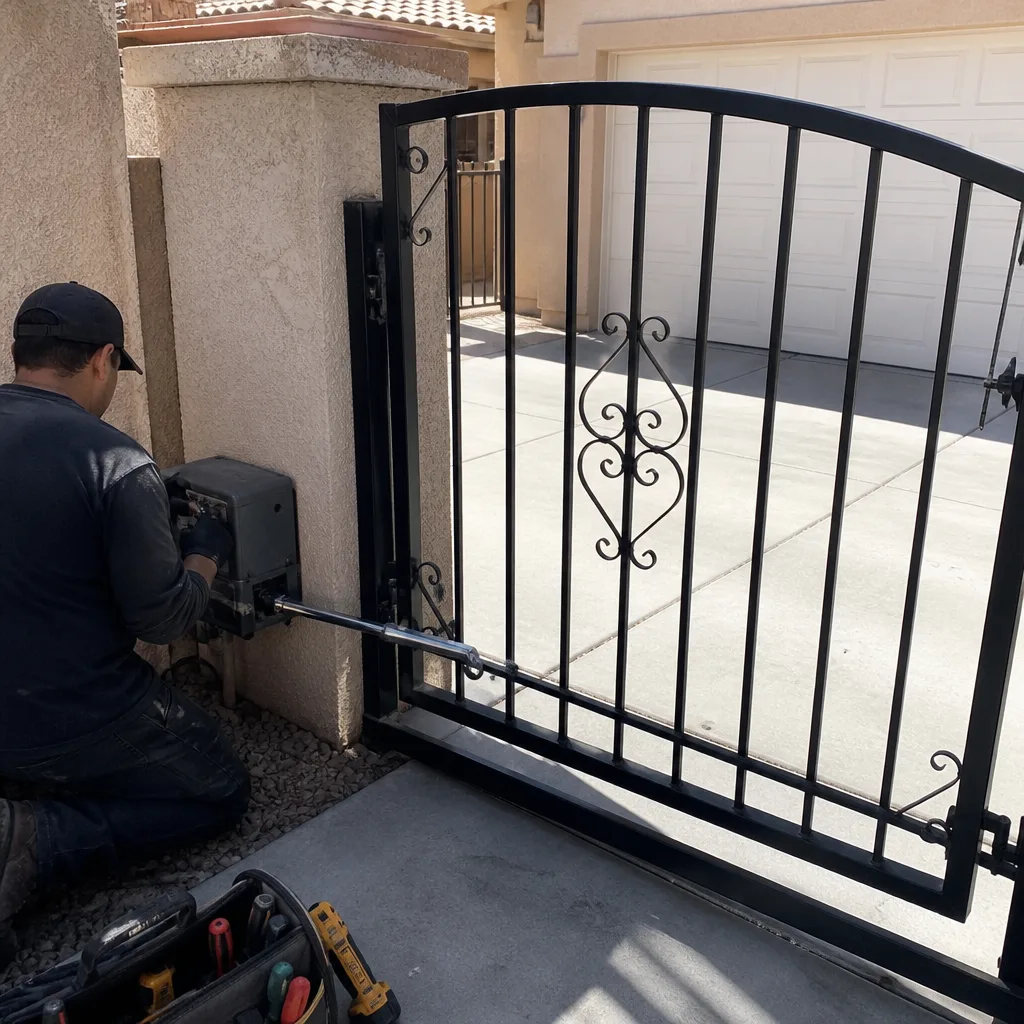
Some maintenance tasks belong in the DIY column. Some don’t. Call a professional when the gate makes grinding noises under load, when thermal binding has persisted past a bolt-tightening session, when the opener’s circuit board is visibly dusty internally, when the auto-reverse feature fails the 2×4 test, or when your GFCI trips and won’t reset. These are all symptoms of problems that get more expensive the longer they run. If your gate opener is a DoorKing, Elite, Viking, or Ghost Controls unit, these brands have specific tolerances and board-level diagnostics that are genuinely different from the generic units. A professional who knows the brand saves you time and parts cost. Gate Opener Repair in Las Vegas is what we do every day. Calder Gate Repair Las Vegas offers free estimates in Las Vegas; call (725) 220-0280 and we’ll come out and take a look, with a written price before any work starts, always.
See the difference
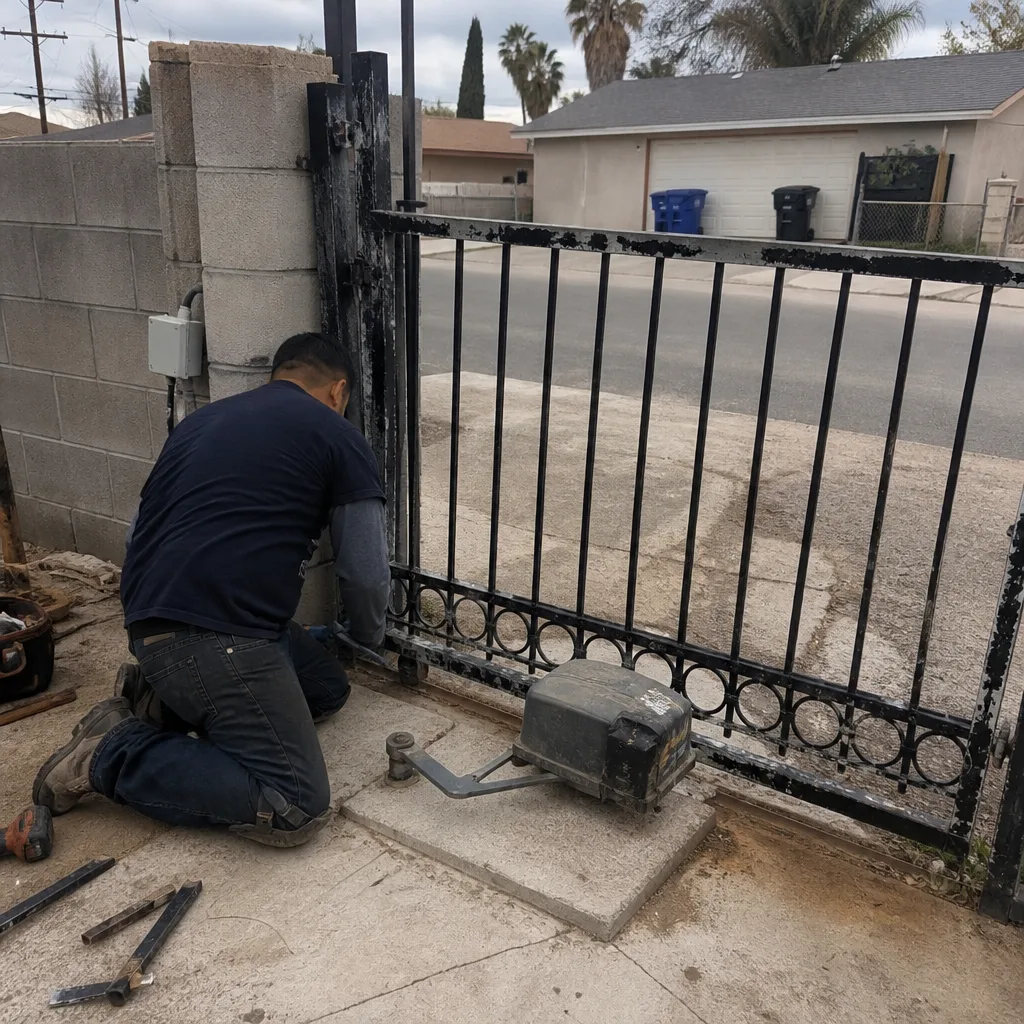 Before
 After
After Before
 After
After Before
 After
AfterFrequently Asked Questions
At minimum, monthly for sensor cleaning and a full-cycle listen test, quarterly for the dust inspection and track maintenance, and annually for the full thermal expansion check and monsoon prep. Las Vegas’s dust and heat make monthly attention a practical necessity, not a nice-to-have.
The best gate lubricant for Las Vegas is a dry-film PTFE or molybdenum disulfide spray rated above 200°F, applied thin and wiped nearly dry. Standard lithium grease thins in summer heat, drips into the motor housing, and shortens opener life. Avoid anything that feels greasy to the touch after application.
Yes, specifically the ground fault circuit and the drainage around the post base. A single hard monsoon storm can deliver enough sheet water to infiltrate a poorly drained post and fault a control board, and most control boards are replaced, not repaired.
That’s thermal expansion. The steel gate physically lengthens as the day heats toward 110°F, closing the gap to the post. If the afternoon clearance is below 1/4 inch, the gate will bind. Measure the gap in the morning and again mid-afternoon to confirm, then correct the alignment or post drift.
Most professional gate maintenance visits in Las Vegas run $95 to $200, depending on scope, with full inspections including lubrication on the higher end. Parts are extra if something is worn. The most cost-effective way to budget is to combine your annual maintenance with a visual opener inspection before summer. Call (725) 220-0280 for an exact quote on our Gate Repair services; estimates are free, and we give you a written price before any work begins.
Yes, the cleaning, sensor wiping, and monthly visual checks are genuinely DIY-friendly. The line is at electrical diagnosis, auto-reverse testing failures, and anything requiring torque-sensitive disassembly of the opener or motor. At that point, the cost of a professional visit is cheaper than the cost of doing it wrong.
The Bottom Line
Las Vegas kills gates with dust, heat, and monsoon water; in that order. The standard gate maintenance checklist ignores the first and third and barely acknowledges the second. The fix is a calendar-driven routine built around dry-film lubricants, monthly sensor cleaning, a morning-versus-afternoon thermal expansion check, and a July monsoon prep session that includes ground fault testing and post-base drainage. Most gate failures in Las Vegas are preventable with fifteen minutes a month and an hour a year. The alternative is waiting for the day the gate stops moving, and paying three times as much to fix a failure that a checklist would have caught. The Calder Gate Repair Las Vegas home page is the starting point if you want help building a maintenance schedule for your specific opener.
Written by Nico Alvarez, Owner at Calder Gate Repair Las Vegas, serving Las Vegas since 2009. For more guides & resources, visit our blog.