
Last updated October 16, 2026
 Wrought iron
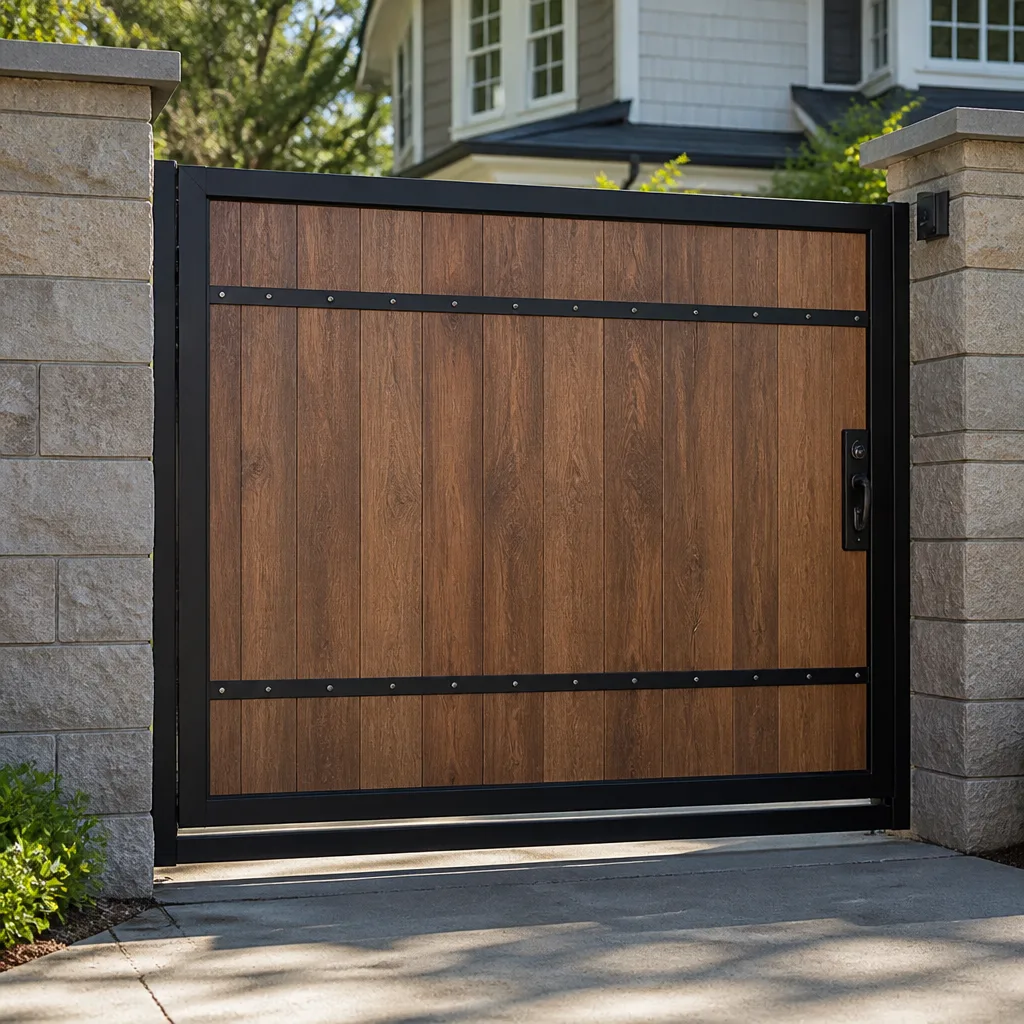 Wood & steel frame
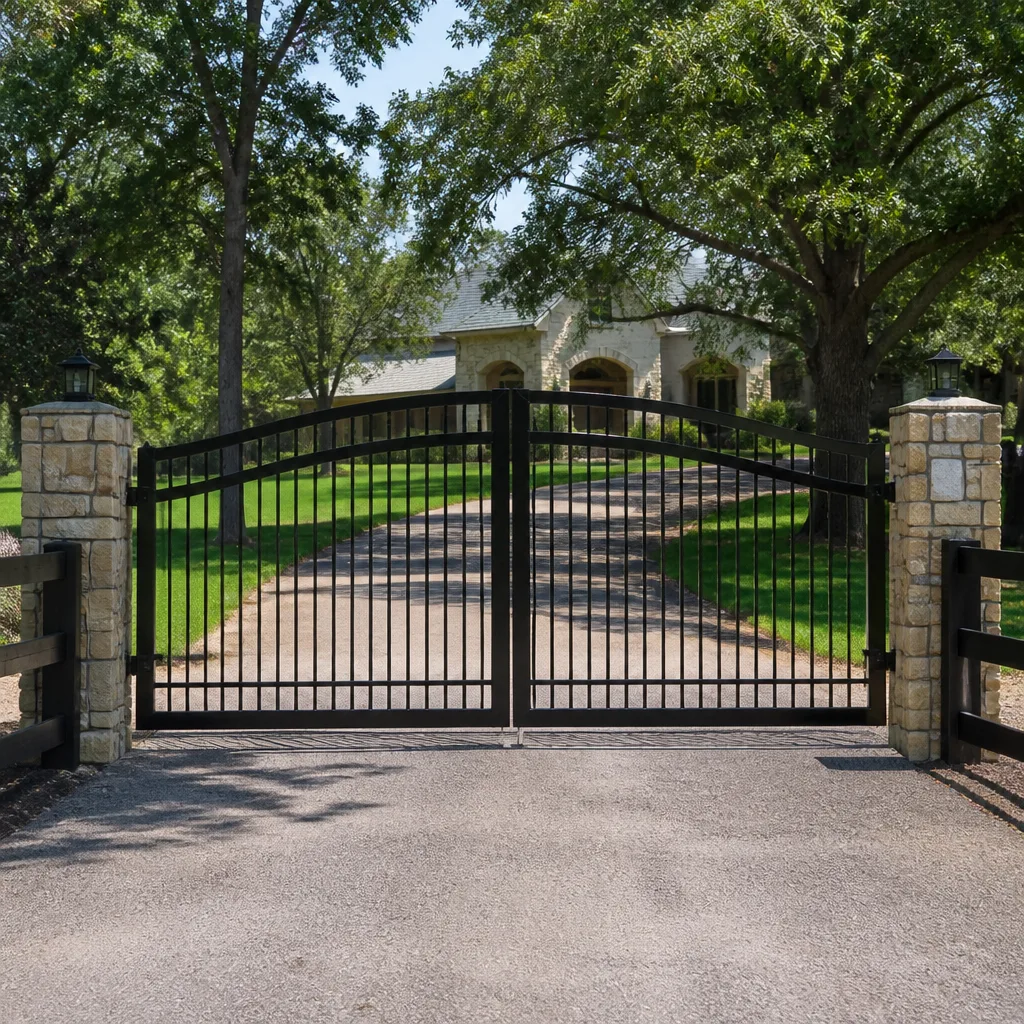 Farm & ranch
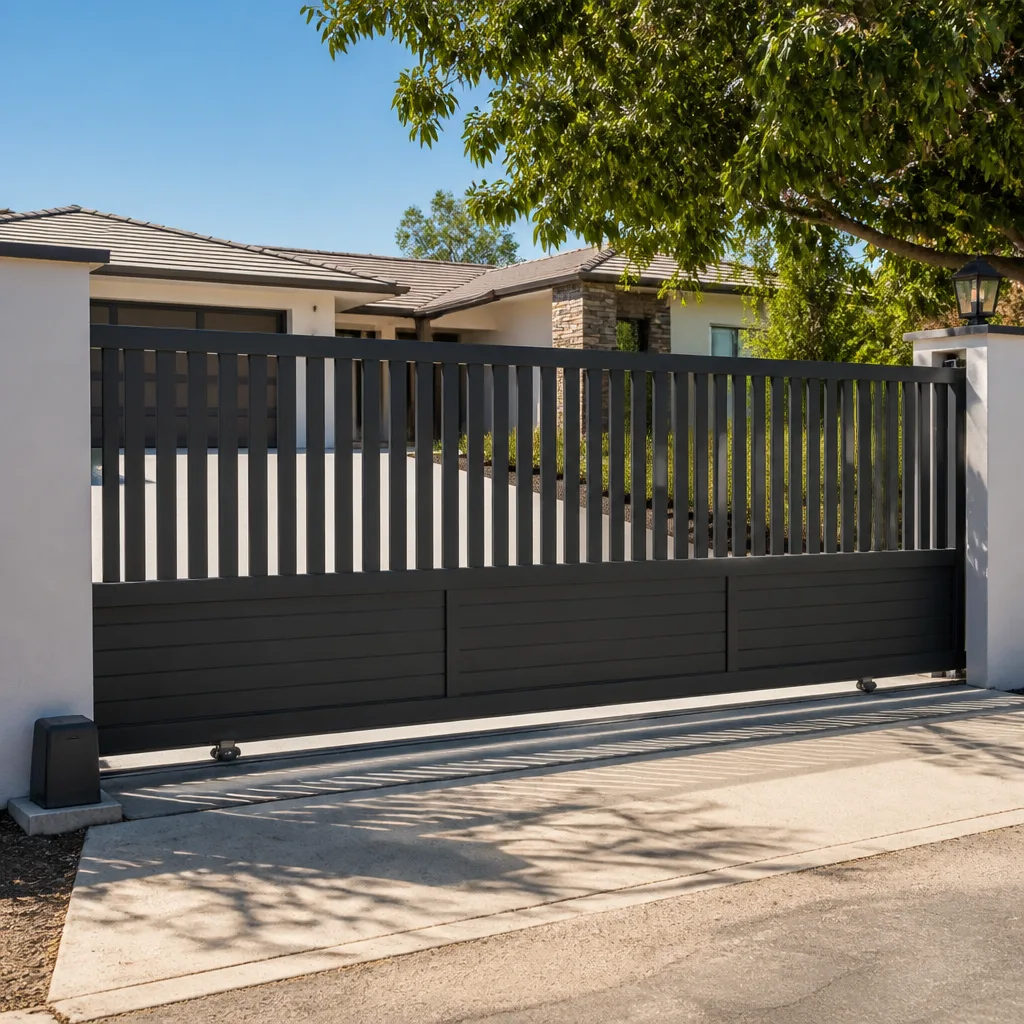 Sliding driveway gates
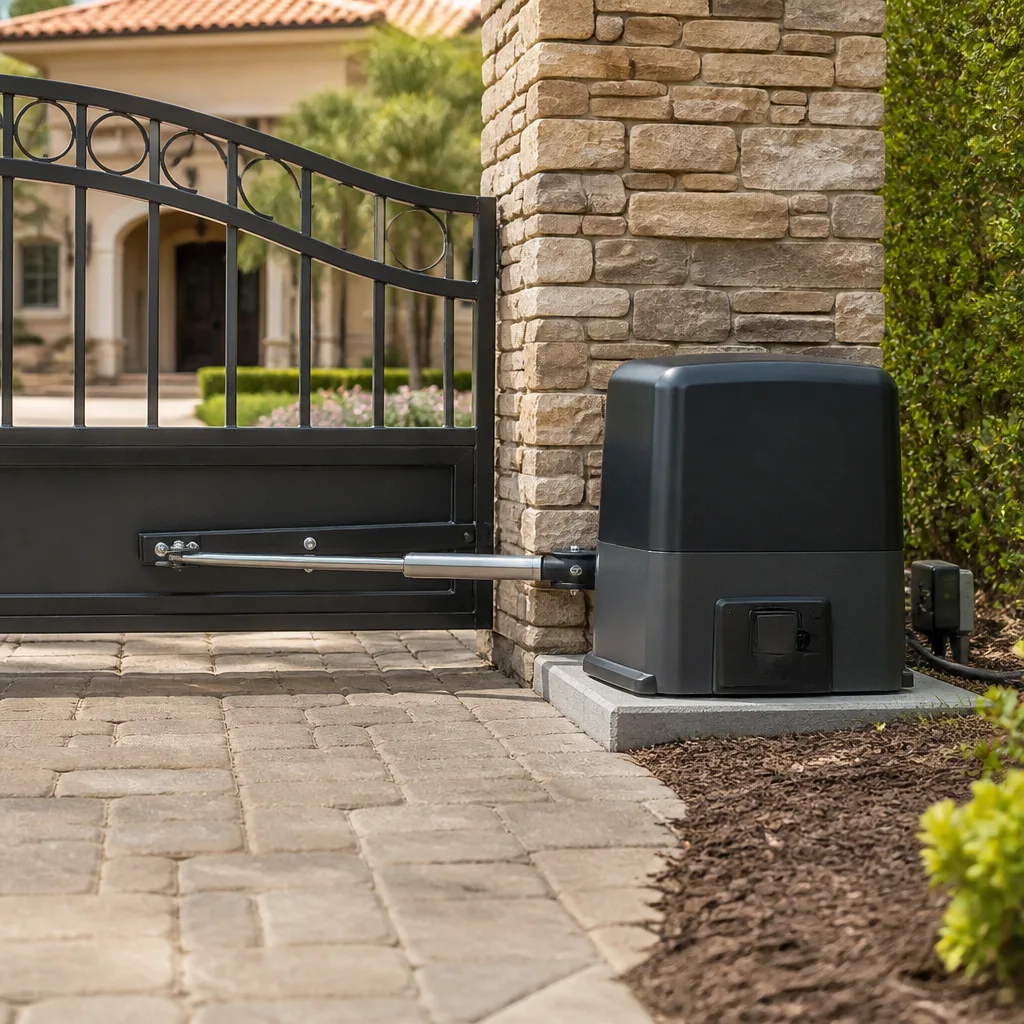 LiftMaster operators
Free on-site gate assessment - hinges, posts, and your LiftMaster or Nice gate operator checked before anything is quoted
The assessment is free and the quote is the invoice.
Get your free estimateDIY vs Professional Gate Repair: The Las Vegas Homeowner’s Decision Guide
The gate repair task Las Vegas homeowners most often attempt on their own is adjusting the limit switches. It’s also the one most likely to void a manufacturer warranty and cook a motor that’s already running hot from the desert climate. This guide draws a hard line between what’s genuinely safe to handle yourself and what you should hand to a licensed pro, with real dollar figures, brand-specific warranty realities, and the Nevada contractor rules that most online advice skips entirely. By the end, you’ll know exactly where that line sits for your specific gate and your specific situation.
Quick Answer
DIY gate repair in Las Vegas is genuinely safe for three tasks only: lubrication, remote reprogramming, and photo-eye sensor cleaning. Everything involving electrical connections, opener replacement, post work, or anything your HOA or a manufacturer warranty touches should go to our Gate Repair services or another licensed professional. The deciding factor isn’t just money. In Las Vegas, it’s heat-related component damage, warranty voids, and HOA liability exposure.
Styles & brands we work with
Table of Contents
- The Gate Repair Permission Matrix: What’s Actually DIY-Safe
- Why Las Vegas Heat Changes the DIY Math
- Warranty Voids by Brand: What Non-Authorized Service Actually Costs You
- Nevada Contractor Licensing and HOA Rules: The Legal Layer
- The Real Cost Comparison: DIY vs Pro in Las Vegas
- The Hybrid Approach: Do the Safe Stuff, Document Everything
- Step-by-Step: The Three DIY-Safe Tasks in Detail
- Common Mistakes to Avoid
- When to Call a Professional
- Frequently Asked Questions
The Gate Repair Permission Matrix: What’s Actually DIY-Safe
Here’s the honest breakdown. After years of gate repair in Las Vegas, we can tell you that the line between DIY-safe and not is cleaner than most guides admit. It comes down to one question: does this task involve electricity, structure, or a manufacturer’s serial number?
If the answer is yes to any of those three, it’s not DIY. If the answer is no to all three, you can handle it with basic tools and an afternoon. Here’s the full matrix.
Safe for DIY: The Green Zone
- Lubricating hinges, rollers, and chains. No electrical contact, no structural change, no warranty risk. Use a silicone-based lubricant, not WD-40, which attracts dust and grit.
- Reprogramming a remote control. If you still have the original remote or the opener’s instruction manual, this is a 10-minute task with no tools. Most brands have a “learn” button on the control board.
- Cleaning photo-eye sensors. The small lenses at the base of the gate track get dusty fast in Las Vegas. A dry microfiber cloth usually fixes a gate that reverses for no reason.
- Tightening visible, accessible bolts. If you can see a bolt wiggling and reach it without removing panels or disconnecting anything, snug it up. Don’t crank on it. Snug, not seized.
Not DIY: The Red Zone
- Anything involving wiring or the control board. Gate openers run on 24V or 120V depending on the model, and a wrong connection can fry the board or energize the gate frame.
- Opener replacement or motor work. This is a swap that touches wiring, mounting, chain tension, and safety settings. Do it wrong and the gate itself becomes a hazard.
- Post repair, post replacement, or welding. Gate posts in Las Vegas sit in concrete. A leaning post means excavation, re-pouring, and often welding. No homeowner should attempt this.
- Spring replacement on cantilever or slide gates. These are under tension. Not garage-door-spring tension, but enough to take off a finger or worse.
- Anything your HOA or warranty requires a licensed pro to do. More on that in the sections below.
The green zone is short on purpose. Most gate failures we see in Las Vegas start in the red zone, which is why the DIY-saves-money argument usually falls apart when someone opens the control box and finds a board they’ve never seen before.
Why Las Vegas Heat Changes the DIY Math
Most DIY gate repair advice online is written for homeowners in Ohio or North Carolina. It assumes you’re working in a garage, in 70-degree weather, with a gate that’s had time to cool down. That is not Las Vegas. And the heat isn’t just uncomfortable. It changes how components behave and how safely you can work on them.
Here’s what we mean, and we’ve seen this play out in neighborhoods from Summerlin to Henderson.
Heat and static: the invisible board killer
Gate control boards live inside metal enclosures. In a Las Vegas summer, the inside of that enclosure can hit 140 degrees or more by mid-afternoon. When you open it and start touching terminals, you create static discharge. On a cool day, that discharge is a non-event. On a 110-degree day, the board is already stressed, and the discharge can fry a transistor that was already near its thermal limit. This is a real failure mode, not a theoretical one, and it’s the second most common reason we get called after a homeowner replaces a battery and suddenly the gate won’t respond.
Capacitors and heat don’t mix
Capacitors are the cylindrical components on a gate opener board that store and release energy. They have a rated temperature range. Many are rated to 85�C (185�F). The inside of a Las Vegas gate control box in August can push a capacitor toward its limit, especially if the box is in direct sun. A capacitor that’s been heat-cycled for 5 summers in Las Vegas will fail much faster than the same capacitor in a cooler climate. That’s not a brand problem. It’s physics.
Metal frames and burns
A black steel gate in direct Las Vegas sun will hit 160 to 180 degrees by 2pm in July. Touch it with bare skin and you’ll get a second-degree burn. This sounds obvious, but it changes how you work: you need gloves, you need shade, and you need to wait for the gate to cool before touching metal parts or lubricating hinges. Most DIY guides don’t mention this because most DIY guides aren’t written for a desert climate.
The practical takeaway: if you’re going to do any DIY gate work in Las Vegas, do it before 9am or after 7pm, in the shade, and never in direct sun. The heat is the reason a 20-minute task becomes a 2-hour task, and the reason a small mistake becomes a fried board.
Warranty Voids by Brand: What Non-Authorized Service Actually Costs You
This is the section most DIY gate repair guides skip entirely, and it’s the one that costs Las Vegas homeowners the most money over time. Every major gate opener manufacturer has explicit warranty language. And in nearly every case, that language says something like this: unauthorized service or modification voids the warranty. “Unauthorized” means anyone who isn’t a trained or factory-authorized technician. It means you.
Here’s how that breaks down by the brands we work on most often in Las Vegas.
LiftMaster
LiftMaster gate openers carry a multi-year limited warranty on the motor and control board. The warranty card is explicit: it does not cover damage caused by improper installation, unauthorized repair, or modification. Opening the control panel and adjusting the limit switches yourself doesn’t automatically void the warranty, but if your adjustment causes a limit overrun that strips the gear or burns the motor, that specific repair is not covered. Given that a replacement LiftMaster motor can run $250 to $600 before labor, that’s a real risk.
DoorKing
DoorKing is one of the most common brands on Las Vegas residential gates, especially in gated communities and HOAs. Their warranty states that service must be performed by a professional gate operator service company. DoorKing boards are not user-serviceable in the warranty’s eyes, and the company has been known to ask for the servicing company’s name when processing warranty claims. If you can’t name one, don’t expect coverage.
Mighty Mule
Mighty Mule is the DIY-friendly brand, which creates a false sense of security. Yes, they sell openers at big-box stores and market them to homeowners. But their warranty still excludes damage from “unauthorized repairs or alterations to the original equipment.” The difference is that Mighty Mule parts are cheaper to replace out of warranty (a full opener is $300 to $800 on average), so a voided warranty hurts less. But it still hurts.
Elite
Elite gate openers are common on higher-end Las Vegas properties and commercial-style residential gates. Their warranty language is among the strictest: any service not performed by an authorized Elite dealer voids the warranty on the spot. Elite control boards are expensive, often $400 to $900, and they are not forgiving of amateur repair attempts.
Some practical math: if you have a DoorKing or Elite opener still under warranty, a DIY repair gone wrong means paying full retail for a board that would have been free. That single mistake can cost more than a professional service call would have cost in the first place.
Nevada Contractor Licensing and HOA Rules: The Legal Layer
Here in Nevada, the State Contractors Board regulates who can legally perform construction and repair work. The rule is simple: any work valued at $1,000 or more in labor and materials combined requires a licensed contractor. That’s the state threshold.
But gate repair doesn’t fit neatly into that box. Here’s what actually applies.
Electrical work
Connecting a gate opener to your home’s electrical panel, running a new power line, or installing a new circuit requires an electrical contractor’s license. This isn’t a gray area it’s explicit. If your gate opener replacement requires new wiring from the house, a homeowner doing that work themselves is taking on liability that their homeowner’s insurance may not cover.
Structural work
Gate posts, concrete footings, and any welding on the gate frame falls under general contracting or concrete contractor licensing rules. A leaning post that needs excavation and re-pour is not a DIY job in any state, but in Nevada it’s a legal question as well.
The HOA layer
And then there’s the HOA. This is where Las Vegas diverges from most of the country. Las Vegas has one of the highest concentrations of HOA-governed communities in the United States. Nearly every gated community, and a huge percentage of single-family neighborhoods, has CC&Rs that govern gate maintenance.
Those CC&Rs often include language requiring that gate repairs be performed by a licensed and insured contractor, not a homeowner, regardless of the state’s $1,000 threshold. We’ve seen CC&Rs that explicitly say “all gate operator work must be performed by a professional service provider.” So even a $50 photo-eye replacement could be an HOA violation if your community’s rules demand professional service.
What’s the risk of ignoring that? Fines, for one. Many Las Vegas HOAs can fine you for unapproved work. And liability: if your DIY repair fails and the gate damages your neighbor’s car, the HOA’s insurance won’t cover it and neither will yours, because the work was performed in violation of your CC&Rs.
Before you attempt any DIY gate repair in Las Vegas, pull your HOA’s CC&R document and check the maintenance section. It takes 10 minutes and could save you a four-figure fine.
The Real Cost Comparison: DIY vs Pro in Las Vegas
Let’s talk actual numbers. For a detailed look at pricing, see our Gate Repair Cost Breakdown: The Las Vegas Homeowner’s Reference for 2026. In Las Vegas, gate repair pricing runs in a fairly predictable range, and understanding those ranges is the first step to deciding whether DIY actually saves you money.
Most gate opener repairs run $195 to $450 before parts. That’s the labor rate range for a service call that includes diagnosis and the repair itself. Parts add to that depending on the brand and the component. Here’s the breakdown by common job.
| Repair Type | DIY Cost | Pro Cost | Risk of DIY |
|---|---|---|---|
| Photo-eye sensor cleaning | $0 (microfiber cloth you already own) | $95-$150 service call | Very low |
| Remote reprogramming | $0-$15 (battery replacement) | $75-$125 if you call a pro | Low |
| Hinge lubrication | $10-$20 (silicone lubricant) | $75-$150 service call | Very low |
| Limit switch adjustment | $0-$30 (screwdriver and time) | $150-$250 including inspection | High (motor burnout risk) |
| Control board replacement | $200-$900 (if you can find the right part) | $350-$1,200 installed and programmed | Very high (wrong board, wiring mistake) |
| Opener motor replacement | $300-$800 (part only) | $600-$1,500 installed and warrantied | Very high (electrical and safety) |
| Post straightening or replacement | Not DIY-able | $250-$2,000+ depending on scope | Extreme |
The pattern is clear: the DIY-saved dollars are meaningful on the green-zone tasks (lubrication, cleaning, reprogramming) and close to zero, or negative, on red-zone tasks once you factor in the cost of a mistake. A homeowner who tries to replace a DoorKing board, wires it wrong, and burns both the old and new board is out $400 to $1,800 and still has a broken gate. Meanwhile, the professional service call was $350 to $500 all in.
The other cost factor that’s easy to miss: time. In Las Vegas heat, a DIY gate repair that takes a pro 45 minutes can take a homeowner three hours, two of which are spent sweating in the sun and cursing at a control board. Your time has value. Rideshare-level transparency has value too, and that’s what a good gate repair company should give you: a real arrival time you can track, a written price before work starts, and a digital invoice you pay from a link. If the company you’re considering doesn’t offer that, keep looking.
Electric gate repair in Las Vegas doesn’t have to be a mystery. The honest answer is that most of the real value of hiring a pro isn’t the labor. It’s the warranty, the liability coverage, and the certainty that the repair won’t fail in three weeks.
The Hybrid Approach: Do the Safe Stuff, Document Everything
The smartest Las Vegas homeowners we work with don’t ask “DIY or pro?” They ask “which parts are mine, and which parts are yours?” That’s the hybrid approach, and it’s the one we’d recommend to our own families.
Here’s the structure.
Step 1: Take the green-zone tasks off the pro’s plate
Lubrication, sensor cleaning, and remote reprogramming are yours to own. Do them on a schedule, not reactively. For a complete schedule, see our Gate Repair Maintenance Checklist for Las Vegas Homeowners. Lubricate hinges and rollers every 90 days. Clean photo-eye sensors every 60 days, or monthly during dusty months (May through August in Las Vegas is prime dust season). Reprogram remotes as needed.
Step 2: Keep a simple log
This is the step almost nobody does, and it’s the highest-value 5 minutes you can spend. Keep a note on your phone with the date, what you did, and what you observed. Example: “Feb 14, lubricated hinges with silicone, cleaned sensors, noticed chain tension looks loose on left side.” When you do eventually call a pro, that log is gold. It tells the technician exactly what to look for and saves you a diagnostic charge.
Step 3: Call a pro at the first red-zone symptom
The moment you notice a symptom that suggests an electrical, structural, or motor problem, stop. Don’t open the panel. Don’t “just take a look.” Call a gate opener repair specialist and describe the symptom in detail. If you have a log, use it. If you don’t, describe what you’ve seen.
Step 4: Verify the pro’s credentials before they arrive
Any gate repair company working in Las Vegas should carry the basics: a business license, liability insurance, and technicians who are background-checked. At Calder Gate Repair Las Vegas, we send background-checked, uniformed technicians with a live, trackable arrival time. For more guides & resources, visit our blog. Not a vague four-hour window. A real ETA you can follow on your phone. That’s part of The Relay Standard, the booking-to-invoice experience that includes a written price before anything starts and a digital invoice you pay from a link.
The hybrid approach saves the money that’s actually worth saving, avoids the mistakes that cost thousands, and leaves you with a gate that works and a warranty that’s intact.
Step-by-Step: The Three DIY-Safe Tasks in Detail
If you’re going to do the green-zone work yourself, do it correctly. Here are the three tasks in full detail, written for Las Vegas conditions.
Task 1: Lubricating hinges, rollers, and chains
- Wait until the gate is cool to the touch. In Las Vegas summer, that means before 9am or after 7pm.
- Identify the moving parts: hinge pins, roller wheels, and the chain or drive track if your opener uses one.
- Use a silicone-based lubricant, not WD-40 and not grease. Silicone doesn’t attract dust, which is essential in a city where the air is full of fine desert grit.
- Apply a small amount to each hinge pin and roller. A little goes a long way. Excess lubricant drips and attracts dirt.
- Wipe away any excess with a clean cloth.
- Cycle the gate open and closed once or twice to work the lubricant in.
Frequency: every 90 days, or every 60 days during summer when dust is heavy.
Task 2: Cleaning photo-eye sensors
Photo-eye sensors, sometimes called safety sensors, are the small circular lenses mounted near the bottom of the gate track or on the gate posts. They send an invisible beam across the gate opening. If the beam is broken, the gate won’t close or will reverse.
- Locate both sensors. There’s always a pair. One is the transmitter, one is the receiver.
- Inspect each lens for dust, dirt, or spider webs.
- Wipe each lens gently with a dry microfiber cloth. Don’t use glass cleaner or water, which can leave residue that attracts more dust.
- Check alignment. Both sensors should face each other directly. If one has been knocked slightly off-angle, gently adjust it until the indicator light (usually a small LED) turns solid instead of blinking.
- Test the gate. It should close fully without reversing.
Frequency: every 60 days, or monthly during the dusty months.
Task 3: Reprogramming a remote control
Remote programming varies by brand, but the general approach is the same across LiftMaster, DoorKing, Mighty Mule, and Elite openers.
- Find the “learn” or “program” button on your opener’s control board. It’s usually a small button, often red or green, on the main circuit board inside the control box.
- Press and release the learn button. An indicator light on the board will start flashing, usually for 30 seconds.
- Within that 30-second window, press the button on your remote that you want to program.
- Wait for the indicator light to blink or go solid, depending on the brand. The remote is now programmed.
- Test by pressing the remote button. The gate should open or close.
If you don’t have the original remote or the manual, this task is still usually doable with an online search of the brand and model number. But if the remote still won’t program after two attempts, stop and call a pro. A control board that won’t accept a remote is a symptom of a deeper problem, not a remote problem.
One note: if your gate opener is a Mighty Mule and still under warranty, check the warranty card before opening the control panel. Mighty Mule’s language is more forgiving than DoorKing or Elite, but it’s not unlimited.
Common Mistakes to Avoid
- Adjusting limit switches without understanding what they do. The limit switch is the small sensor that tells the gate when to stop. Turn it too far and the gate over-travels, which strips gears or burns the motor. This is the single most common DIY-created repair we see in Las Vegas, and it’s almost always on an opener already running hot from the climate.
- Using WD-40 on hinges and chains. WD-40 is a solvent, not a lubricant. It’s designed to displace water and free stuck parts, not to lubricate moving gate components long-term. In Las Vegas dust, it becomes a gummy mess that accelerates wear.
- Assuming the problem is the remote when it’s actually the board. Nine times out of ten, a remote that stopped working isn’t a remote problem. It’s a receiver problem on the control board. Replacing the remote doesn’t fix the board.
- Working on the gate in direct Las Vegas sun. The heat alone can cause component damage from static and thermal stress. If you wouldn’t leave your phone in a car at 2pm in July, don’t work on your gate control board at 2pm in July either.
- Ignoring HOA maintenance rules. Many Las Vegas HOAs require professional gate service. Skipping that requirement can result in fines and uncovered liability if the gate damages property or injures someone.
- Attempting post or welding work with no experience. Gate posts in Las Vegas are set in concrete and often weigh hundreds of pounds with the gate attached. A post that’s leaning is under active load. This is not a weekend project.
- Skipping the written quote before work starts. If you do hire a pro, get the price in writing before they turn a single bolt. Reputable gate repair companies in Las Vegas provide this automatically. If they won’t, don’t let them touch your gate.
When to Call a Professional
Call a pro the moment you notice any of these: the gate hesitates, hums without moving, or makes a grinding sound when opening or closing; the gate reverses for no apparent reason even after you’ve cleaned the sensors; the gate is leaning, sagging, or scraping the ground; the control board is showing an error code you don’t understand; or the opener motor is hot to the touch. These are all red-zone symptoms, and every one of them is cheaper to fix before it fails completely than after.
Calder Gate Repair Las Vegas offers free estimates in Las Vegas. Call (725) 220-0280 and a live person answers, 24/7. We’ll give you a written price before any work starts, a written guarantee on every repair, and a free second visit if the repair fails within our 365-Day Done Right Promise. That’s the standard, and it’s what every Las Vegas homeowner should expect.
Frequently Asked Questions
Most gate opener repairs in Las Vegas run $195 to $450 in labor before parts, with common jobs like sensor replacement or limit switch adjustment landing in the $150 to $350 range all-in. A full opener replacement typically runs $600 to $1,500 depending on the brand and the scope of the work. For an exact quote, call (725) 220-0280 and we’ll give you a written price before anything starts.
In most cases, yes. Calder Gate Repair Las Vegas dispatches background-checked, uniformed technicians with a live, trackable arrival time, and we prioritize repair calls. If we can’t get to you the same day, we’ll tell you that on the phone and give you a real time, not a vague window. Call (725) 220-0280 to check availability.
It depends on the work and the value. Nevada requires a licensed contractor for work valued at $1,000 or more, and electrical or structural work carries its own licensing requirements. Many Las Vegas HOAs add a stricter layer: their CC&Rs may require professional gate service regardless of the state threshold. Check your HOA documents first.
It can, depending on the brand and the specific work. DoorKing and Elite require professional service for warranty coverage. LiftMaster and Mighty Mule exclude damage caused by unauthorized repair. If your repair causes a motor burnout or board failure, that specific repair won’t be covered.
We see a lot of DoorKing and Elite openers on higher-end Las Vegas properties, LiftMaster on many newer homes, and Mighty Mule on more budget-conscious installs. Our technicians are factory-familiar with all of these brands, as well as FAAC, BFT, Linear, Viking, and Ghost Controls. Our Las Vegas team can handle virtually any residential gate opener you’re likely to own.
Use the permission matrix from this guide. If the task is lubrication, sensor cleaning, or remote reprogramming, it’s DIY-safe. If it involves wiring, the control board, the motor, the posts, or anything in the red zone, call a pro. If you’re not sure, call (725) 220-0280 and describe what you’re seeing. We’ll tell you honestly whether it’s something you can handle.
The Bottom Line
The DIY-versus-pro gate repair debate in Las Vegas isn’t really about money. It’s about heat, warranties, and liability. The safe DIY tasks are lubrication, sensor cleaning, and remote reprogramming, and doing those yourself saves real money with almost zero risk. Everything else, from limit switch adjustments to opener replacement to post work, carries a risk profile that makes DIY a false economy. The math is straightforward: a $250 professional repair is cheaper than a $400 board you destroy trying to save $100. And in Las Vegas, with the heat and the HOAs, the stakes are higher than most online guides acknowledge. Do the green-zone work yourself, document it, and call a pro for everything else. Gate repair in Las Vegas doesn’t have to be a gamble when you know where the line is.
Written by Nico Alvarez, Owner at Calder Gate Repair Las Vegas, serving Las Vegas since 2009.
See the difference
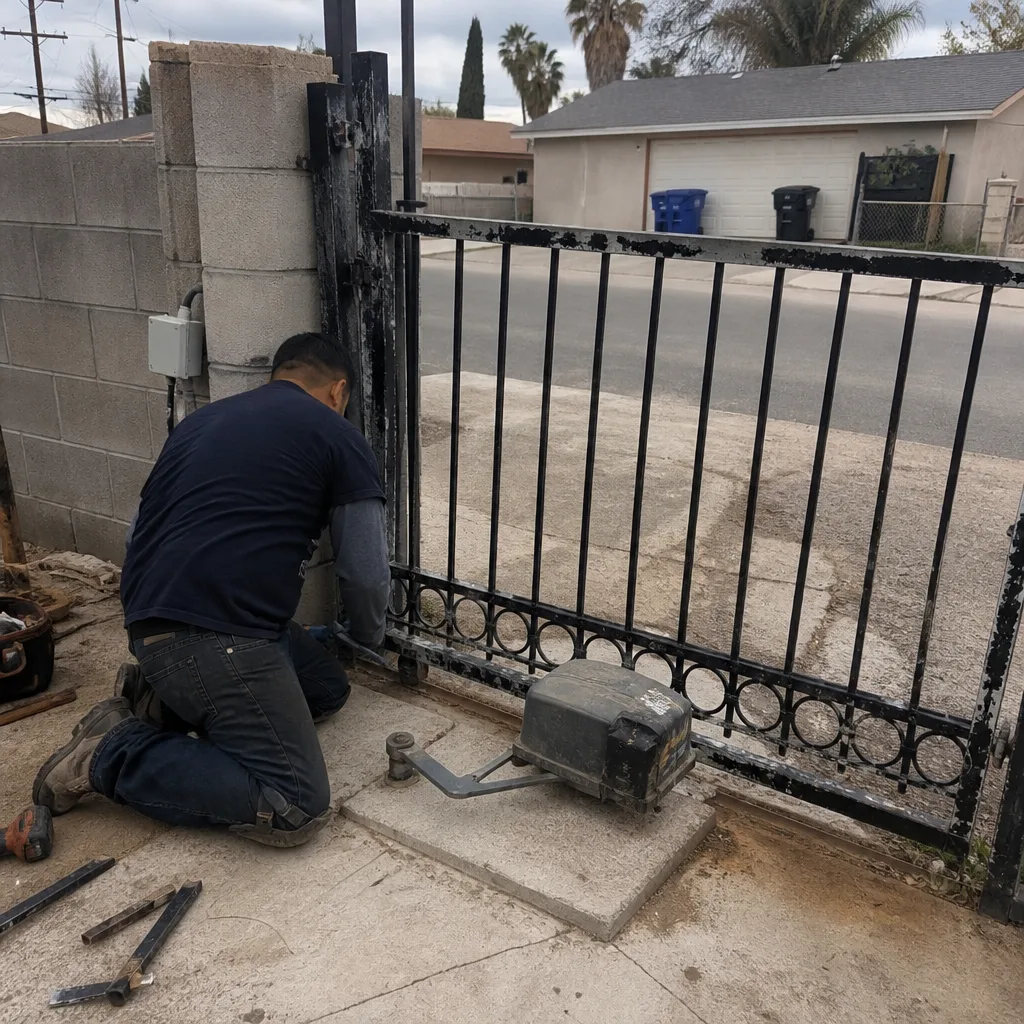 Before
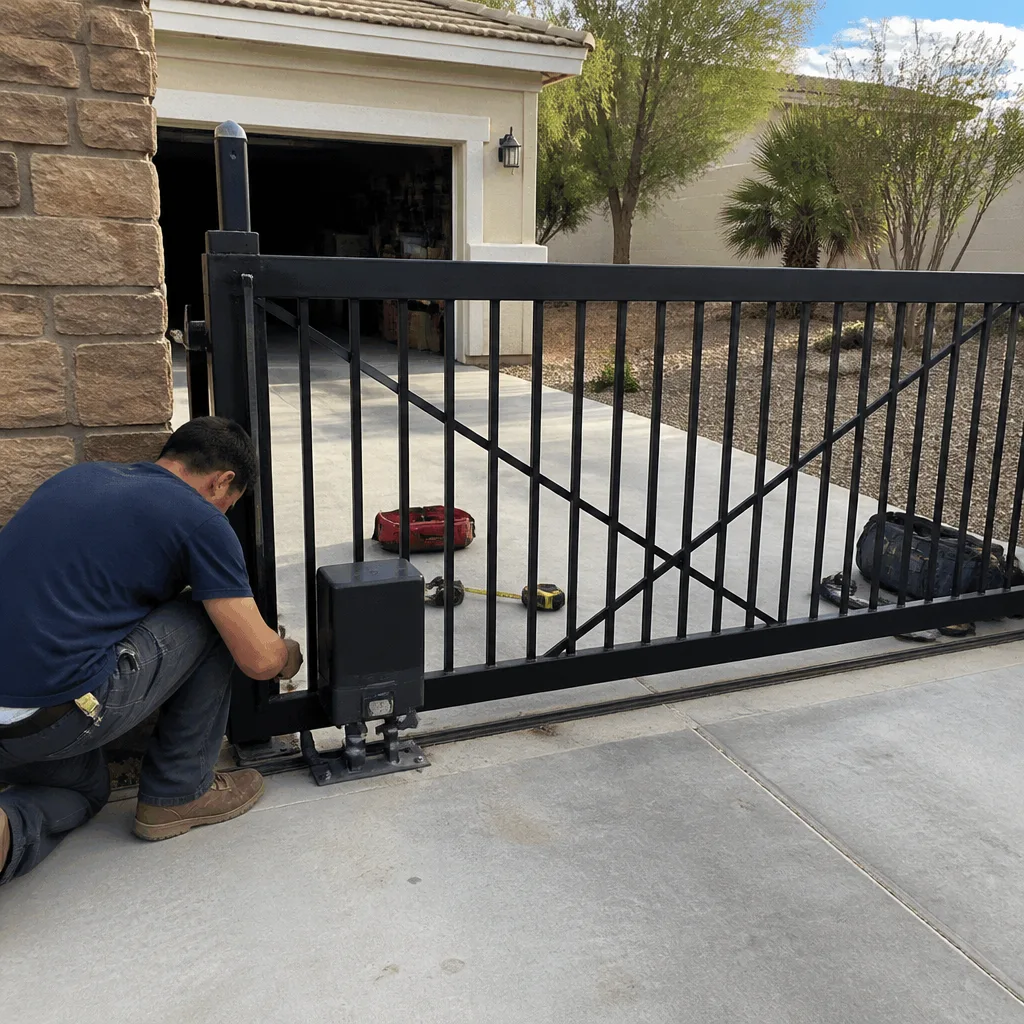 After
After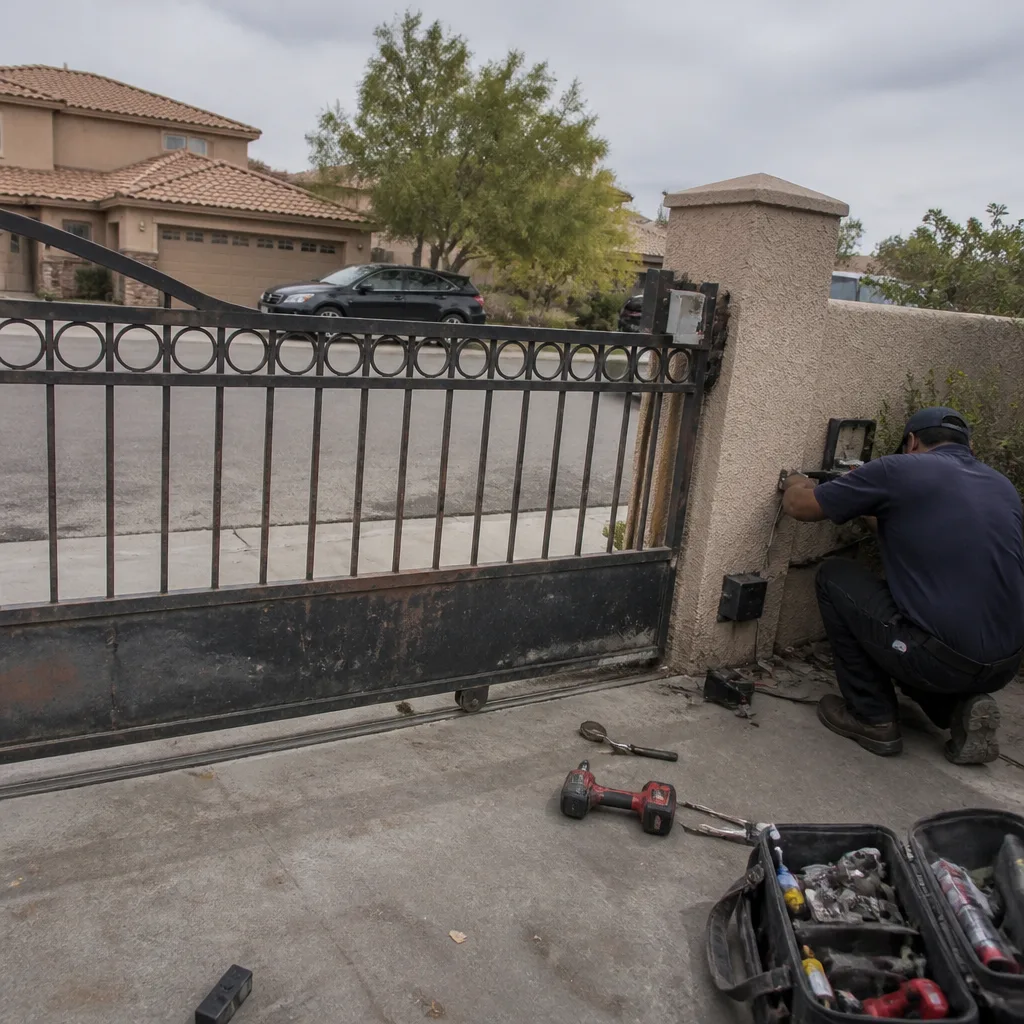 Before
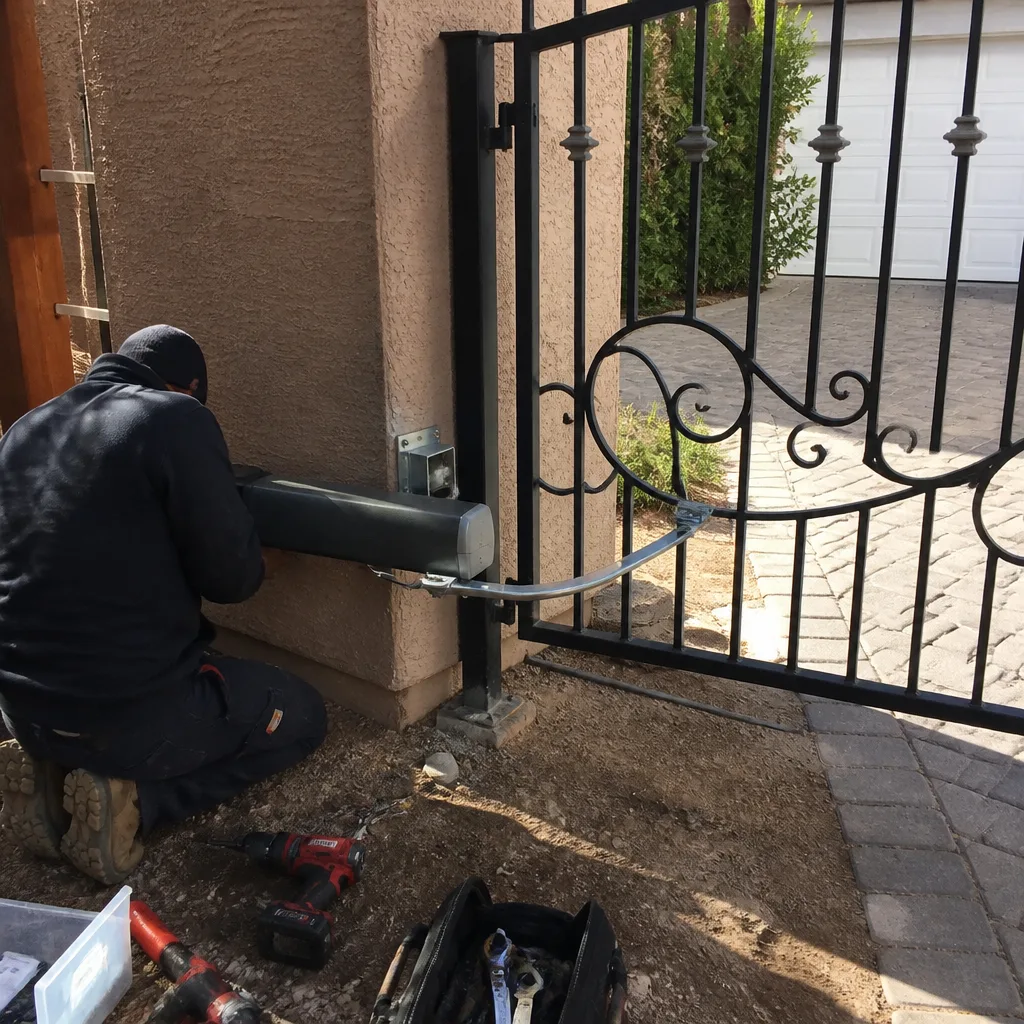 After
After Before
 After
After